







Abu Dhabi is moving to examine a major land-based aquaculture development that could eventually produce around 30,000 metric tonnes of seafood a year. QITAF Holding and Japan’s Global Academy Limited have signed a memorandum of understanding to study the project, which remains subject to feasibility work, investment decisions and regulatory clearances. If advanced, the facility would be built in phases, allowing production capacity to expand gradually before reaching its full target. The plan reflects the emirate’s broader interest in sustainable food production, advanced farming systems and reduced reliance on imported seafood, while also creating opportunities for specialised expertise and technology transfer.
Project Under Review
QITAF Holding, a subsidiary of Abu Dhabi National Investment and Development, is expected to support local coordination for the proposed venture. Its role includes assessing land needs, licensing procedures, utility connections and wider infrastructure requirements in consultation with relevant authorities.
The project is still at an exploratory stage, with technical and commercial studies required before any final development decision is made.
Land-Based Farming Systems
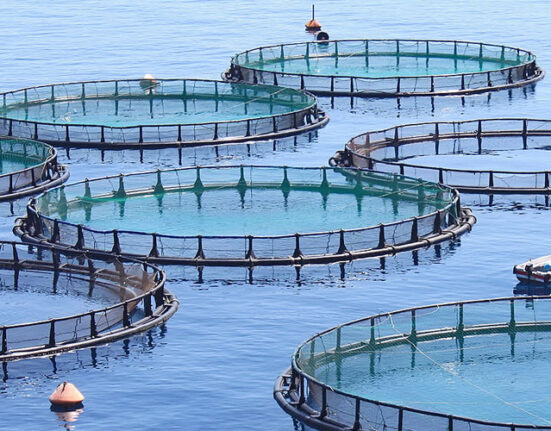
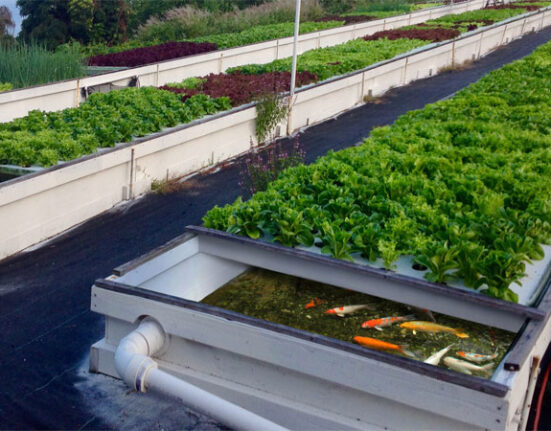
The partners are considering modular Recirculating Aquaculture Systems, a controlled production method that treats and reuses water within fish-farming facilities. The approach is designed to improve efficiency and reduce pressure on marine environments.
Initial production could include commercially valuable species such as hamour, cobia, sea bass, snapper, flounder, halibut and shrimp.
Japanese Technology and Skills
A key part of the cooperation is the planned use of Japanese aquaculture knowledge. The facility may incorporate artificial intelligence, Internet of Things monitoring, automated feeding technology and systems that track and manage water quality.
The partnership also aims to develop local capabilities in aquaculture operations, biosecurity, water management, research and seafood processing.
Food Security Goals
The proposal could extend beyond fish farming to include hatcheries, processing plants, fast-freezing units, cold storage, feed production and distribution networks. Global Academy is set to liaise with Japanese technology providers, public institutions, development bodies and potential international investors.
The initiative follows earlier cooperation between Global Academy and the Abu Dhabi Agriculture and Food Safety Authority during Global Food Week 2025. If completed, the project could strengthen domestic seafood supply and support Abu Dhabi’s ambitions in sustainable aquaculture.
Leave feedback about this