

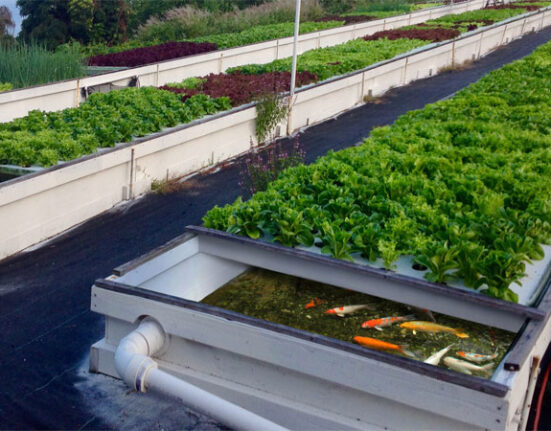







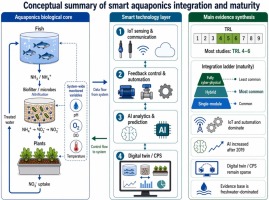
Smart aquaponics is gaining attention as farmers, engineers and food-security researchers look for ways to produce fish and crops with less land, water and fertilizer. A recent evidence synthesis reviewing 125 studies published from 2016 to 2025 found that digital tools are increasingly being applied to aquaponic systems, especially for water-quality monitoring, automated control and predictive decision-making. However, the review also found that the field remains relatively immature. Most systems have been tested in laboratories or small pilot settings, with limited evidence that they can perform reliably over long periods in commercial or multi-site conditions.
IoT and Automation Lead the Field
The review found that Internet of Things technologies and automation dominate current smart aquaponics research. Sensors are commonly used to track variables such as temperature, dissolved oxygen, pH and ammonia, while control systems help regulate pumps, aeration and other operating conditions.
Artificial intelligence applications have expanded since 2019, particularly for forecasting water quality, detecting anomalies, predicting crop or fish growth and supporting optimization. Researchers also identified growing interest in machine learning and computer vision for monitoring plant health and fish welfare.
Readiness Levels Remain Modest
Despite rapid technical progress, most reviewed studies were assessed at technology readiness levels 4 to 6. That means the systems were generally validated in controlled environments or demonstrated as prototypes, rather than proven in sustained real-world operation.
Digital twin and cyber-physical system approaches were comparatively rare. Where they did appear, they were often described as early-stage or isolated implementations rather than fully integrated platforms connecting biological, chemical and engineering processes.
Major Gaps Still Limit Comparison
The authors noted that inconsistent methods, fragmented system designs and non-standard performance metrics make it difficult to compare results across studies. Many projects focus on individual subsystems instead of whole-system coordination among fish, plants, microbes and nutrient cycles.
Future Research Priorities
The review calls for longer trials, multi-location testing and more harmonized reporting standards. It also highlights a major evidence gap: most research focuses on freshwater systems, leaving brackish and marine aquaponics underexplored. Future work will need to test whether smart-control strategies can adapt to salinity, species selection and microbial differences in those environments.
Leave feedback about this