











Ocean carriers are facing capacity constraints at Middle East hub ports as cargo shifts away from traditional Gulf routes toward multimodal and land bridge networks amid the ongoing conflict involving the United States and Iran.
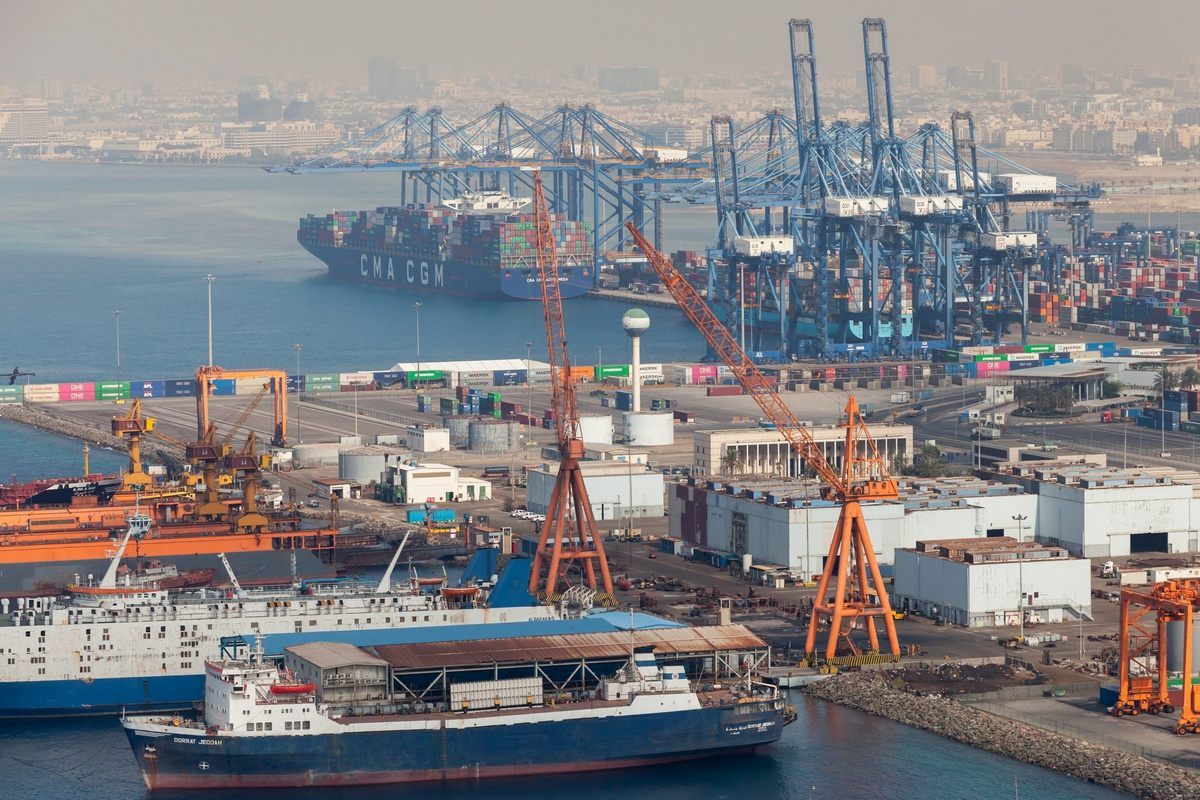
Saudi Arabia’s Port of Jeddah has become an alternative gateway on the Red Sea, with increased cargo volumes contributing to congestion. Mediterranean Shipping Co. (MSC) has introduced a US$500 per TEU congestion surcharge for shipments bound for Jeddah, covering all cargo types, equipment, and existing service agreements. MSC is also allowing customers to reroute shipments through King Abdullah Port, approximately 75 miles north of Jeddah, without changing existing ocean contract terms.
Vessel waiting times at Jeddah are reported at five to ten days on the India-Middle East trade lane. Several regional and feeder carriers, including Folk Maritime and Turkon Line, have suspended direct calls at Jeddah, while CMA CGM has reduced its India-Middle East-West Mediterranean Medex service from weekly to fortnightly sailings from Jeddah.
Following guidance from the Saudi Ports Authority (Mawani), CMA CGM has suspended acceptance of cross-border transit bookings through Jeddah under merchant haulage arrangements. Carrier haulage shipments, where CMA CGM manages inland transportation as part of a door-to-door service, continue to be accepted.
Maersk has also paused new bookings involving landside cross-border transits through Jeddah for cargo moving between Saudi Arabia and the United Arab Emirates, Oman, and Qatar. It has also suspended shipments through Salalah and Sohar in Oman destined for the UAE, Saudi Arabia, Kuwait, Bahrain, and Qatar.
The changes are affecting Indian exporters and logistics providers using Middle East supply chains. Industry participants report that schedule changes are complicating procurement, inventory management, and delivery planning. Some freight forwarders in India report spot rates of up to US$10,000 per FEU from Nhava Sheva Port to Jeddah.
Carriers are adding alternative routes. Hapag-Lloyd, together with Global Feeder Shipping, is launching a Red Sea service connecting Nhava Sheva and Mundra with Aqaba, Jordan, and Sokhna, Egypt. The four-vessel rotation is scheduled to make its inaugural call at Mundra on August 6th.
The developments add further routing and capacity considerations for exporters using Middle East gateways, particularly where transit reliability, freight rates, and inland connections affect supply-chain planning.
Leave feedback about this