













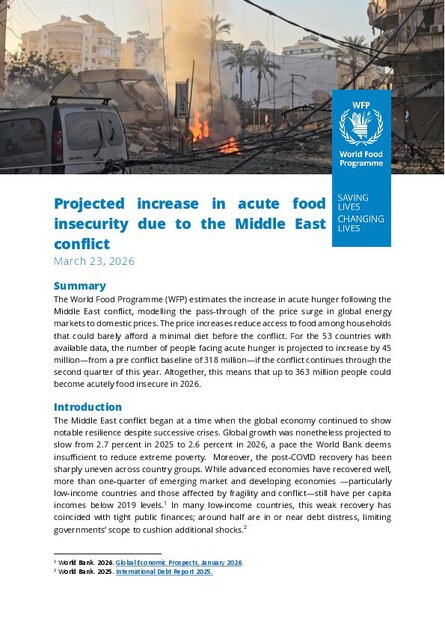
The World Food Programme has released a critical analysis highlighting the severe impact of the Middle East conflict on global and regional food security. As energy prices surge due to the conflict, many vulnerable households face diminished access to affordable food, risking a sharp increase in acute hunger.
Rising Hunger Numbers Amid Conflict
According to modeling conducted by the WFP, if the conflict extends through the second quarter of 2026, the number of people suffering from acute food insecurity in 53 assessed countries could rise by 45 million. This would bring the total to approximately 363 million individuals in acute hunger, up from 318 million prior to the conflict.
Price Spikes and Food Access
The surge in global energy prices has a cascading effect on domestic food costs, adversely affecting households that were already struggling to afford basic nutrition. This dynamic exacerbates food insecurity, pushing more populations into urgent need for assistance.
Global and Regional Implications
The analysis underscores that the conflict’s economic repercussions are not confined to the Middle East alone. The interconnected nature of global markets means that food security concerns will intensify worldwide, with vulnerable nations feeling the brunt of rising prices and disrupted supply chains.
Call for Continued Monitoring and Aid
These projections call attention to the necessity of sustained humanitarian efforts and international cooperation to mitigate the worsening hunger crisis. Monitoring food access trends and providing timely aid are critical to prevent further deterioration of food security conditions.
Leave feedback about this