




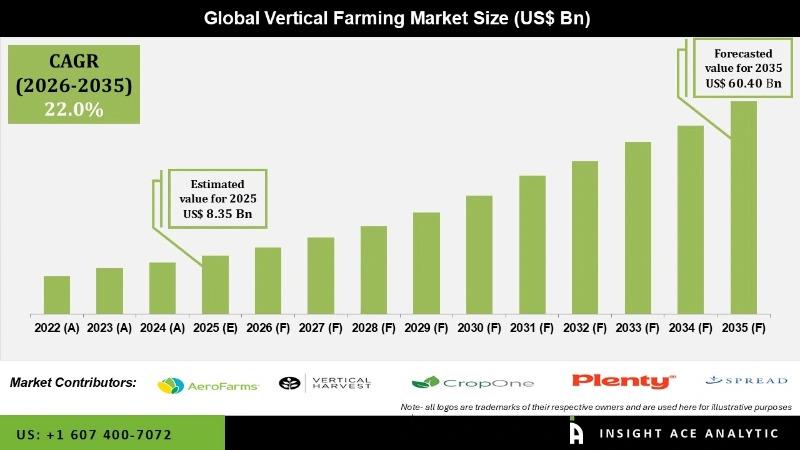
The global vertical farming market is on a strong upward trajectory, expected to grow from $8.35 billion in 2025 to $60.4 billion by 2035. This significant rise—marked by a compound annual growth rate (CAGR) of 22% over the forecast period—is fueled by urbanization, sustainability efforts, and increasing global food demand.
Driving Forces Behind Growth
Vertical farming offers an innovative approach to food production, using controlled environments and advanced agricultural technologies like hydroponics, aeroponics, and climate-regulated growth chambers. By operating in urban spaces such as warehouses and high-rise buildings, it reduces land use while producing food year-round, independent of weather conditions.
High crop yields and resource efficiency are crucial benefits. Hydroponic setups, for instance, can produce harvests up to 13 times a year within a single location, securing reliable food output even in densely populated regions.
Regional Trends and Leadership
The Asia-Pacific region is projected to lead the market, with countries such as China, Japan, India, and South Korea at the forefront. Limited agricultural land combined with population growth is encouraging technological farming alternatives. North America is also poised for strong growth, primarily due to water scarcity concerns and growing environmental awareness.
Challenges Ahead
Despite its potential, vertical farming faces barriers such as high initial setup costs and a lack of familiarity with these advanced systems. However, increasing investment and education in agri-tech are expected to mitigate these hurdles over time.
Key Industry Players and Initiatives
Companies like AeroFarms, Bowery Farming, Crop One, and Plenty Unlimited are at the forefront of vertical agriculture. Notable partnerships, such as AeroFarms’ collaboration with Cargill to improve climate-resilient cocoa crop conditions, highlight the sector’s innovation. Other initiatives focus on integrating clean energy and expanding sustainable practices within urban farming ecosystems.