



Saudi Arabia is turning to hydroponic farming as conflict and shipping disruptions expose the risks of relying heavily on imported food. In the kingdom’s extreme summer heat, traditional farms often struggle to keep vegetables alive, while imports face delays from blockades and attacks along key maritime routes. Indoor farms using nutrient-rich water instead of soil are helping fill that gap. Operators say the technology allows year-round production of tomatoes, cucumbers, peppers, lettuce, herbs, and leafy greens while using far less water and land than conventional agriculture. The shift is increasingly viewed not only as a commercial opportunity, but as a food-security priority.
Imports under pressure
Saudi Arabia, with a population of about 35 million, imports most of its food. Roughly 70% of its fruits and vegetables come from abroad, and dependence rises close to total reliance during the hottest months.
The war between the United States and Iran has complicated those supply chains. Disruptions around the Strait of Hormuz have forced shipments toward the Red Sea port of Jeddah, adding up to two weeks of transit time and increasing exposure to attacks linked to Yemen’s Houthi movement.
Greenhouses in the desert
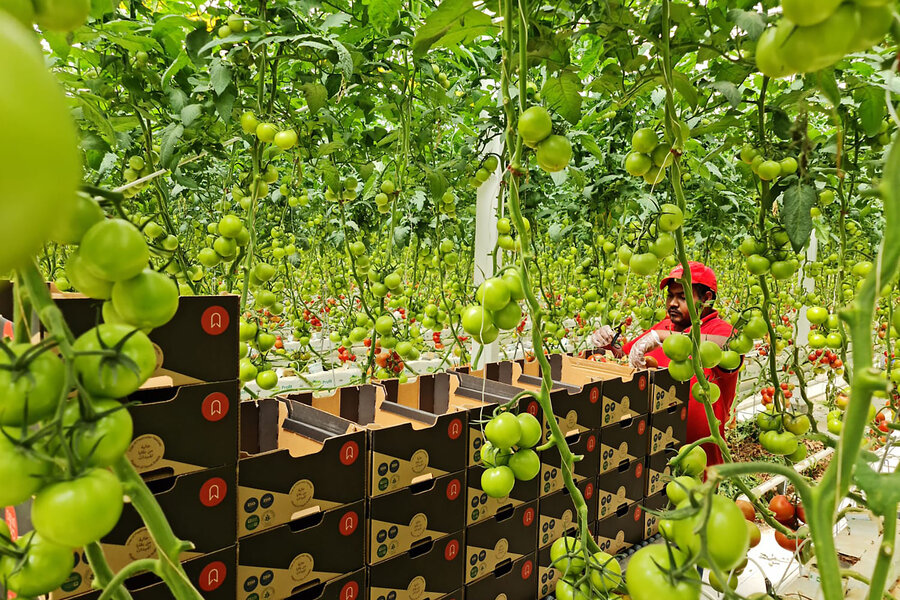
At Dava, a large farm in Al Kharj south of Riyadh, vegetables grow inside cooled glass greenhouses despite desert temperatures that can reach 125 degrees Fahrenheit. The company uses hydroponic systems that feed plant roots with carefully controlled nutrients in water.
Dava now operates about 210 acres of hydroponic greenhouses and produces around 135 tons of vegetables a day. The company says it supplies about 13% of Saudi Arabia’s tomato demand.
Saving scarce water
Hydroponic producers say their systems can sharply reduce resource use. Dava reports water savings of up to 80% and land savings of about 70% compared with traditional farming. Other Saudi operators using floating systems and aeroponics say they have cut water use by as much as 90%.
That matters in one of the world’s most water-stressed countries, where desalination provides a major share of drinking water and energy infrastructure has also faced wartime threats.
Plans for rapid growth
Dava aims to raise output to 250 tons a day by 2028 and 1,000 tons by 2030, supported partly by renewable power. Saudi hydroponic firms are also helping other farmers adopt the technology.
The sector is beginning to look outward as well. Saudi-grown vegetables are being sent to Gulf neighbors and, recently, to the Netherlands, marking a notable step for a country long dependent on European produce.