










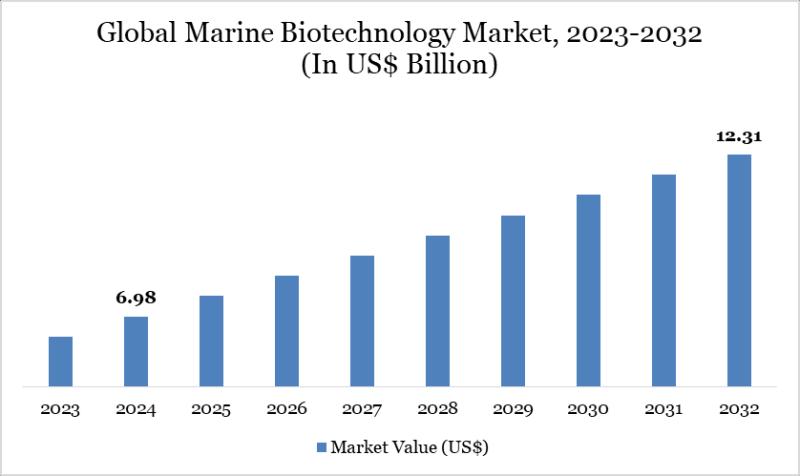
The marine biotechnology market, valued at approximately USD 6.98 billion in 2024, is forecasted to expand robustly to USD 12.31 billion by 2032. This represents a compound annual growth rate (CAGR) of 7.35% over the 2025-2032 period, fueled by extensive applications across pharmaceuticals, nutraceuticals, and aquaculture.
Key Market Drivers
The growth is primarily driven by the rising demand for marine-derived bioactive compounds such as novel anti-cancer agents and industrial enzymes. Significant investment in ocean genomics and sustainable bioprospecting techniques is accelerating discovery and commercialization. Advances in bioinformatics, synthetic biology, and blue biotechnology platforms further enable efficient exploitation of marine resources. Additionally, regulatory approvals and government initiatives supporting marine resource exploration have created a favorable environment for market expansion.
Notable Industry Developments
In the United States, the National Oceanic and Atmospheric Administration (NOAA) and Environmental Protection Agency (EPA) approved Aker BioMarine’s algae-based DHA oil platform in January 2026, facilitating scalable production of omega-3 supplements from microalgae. Marine Biologics has also introduced innovative programmable macroalgae biomass for pharmaceutical and cosmetic use, while collaborating on AI-driven discovery of deep-sea enzymes.
Asia-Pacific developments include Euglena Co., Ltd.’s launch of marine-derived, animal-free polynucleotide skincare lines and Umami Bioworks’ extension of lab-grown sponge peptide nutraceuticals amid relaxed import regulations in Japan. BASF SE received regulatory clearance for krill-oil fortified algal proteins in aquafeeds.
Market Segmentation and Regional Insights
Algae dominate as the primary source, accounting for 40% of the market due to their versatility in nutraceuticals and biofuels. Corals and sponges, notable for their unique anti-cancer compounds, hold 25%. By application, pharmaceuticals lead with a 45% share, driven by marine actives for oncology and antibiotics. Other sectors include food and beverage, cosmetics, and agriculture.
Regionally, North America captures the largest share at 38.5%, supported by strong R&D infrastructure and high demand for marine-derived pharmaceuticals and biofuels. The Asia-Pacific region is the fastest growing with 28.2%, spurred by investments in marine enzyme and aquaculture technologies. Europe holds a 20.1% share driven by cosmetics and natural products innovation, while Latin America and Middle East/Africa contribute 13.2% due to emerging marine resource development.
Opportunities and Challenges
The market is set to benefit from a surge in the blue bioeconomy, focusing on marine-based APIs, algae biofuels, and probiotics supported by collaborations like the EU’s BlueBio alliance and US bioprospecting grants. However, challenges remain from high costs, ocean exploration complexity, regulatory hurdles, and conservation concerns related to biodiversity and ecosystem balance.
Leading companies shaping the market include BASF SE, Aker BioMarine AS, Corbion N.V., DSM-Firmenich, and FMC Corp. Their innovations range from sustainable omega-3 solutions to advanced biopharmaceutical delivery systems, underscoring the sector’s dynamic and rapidly evolving nature.
Leave feedback about this