




first_page
settings
Open AccessReview
Identifying Algal Bloom ‘Hotspots’ in Marginal Productive Seas: A Review and Geospatial Analysis
by
1
Department of Civil Infrastructure and Environmental Engineering, Khalifa University of Science and Technology, Abu Dhabi P.O. Box 127788, United Arab Emirates
2
Engineering Department, University of Cambridge, Cambridge CB2 1TN, UK
*
Author to whom correspondence should be addressed.
Remote Sens. 2022, 14(10), 2457; https://doi.org/10.3390/rs14102457
Submission received: 13 March 2022 / Revised: 16 May 2022 / Accepted: 17 May 2022 / Published: 20 May 2022
(This article belongs to the Special Issue Bio-Optical Oceanic Remote Sensing)
Abstract
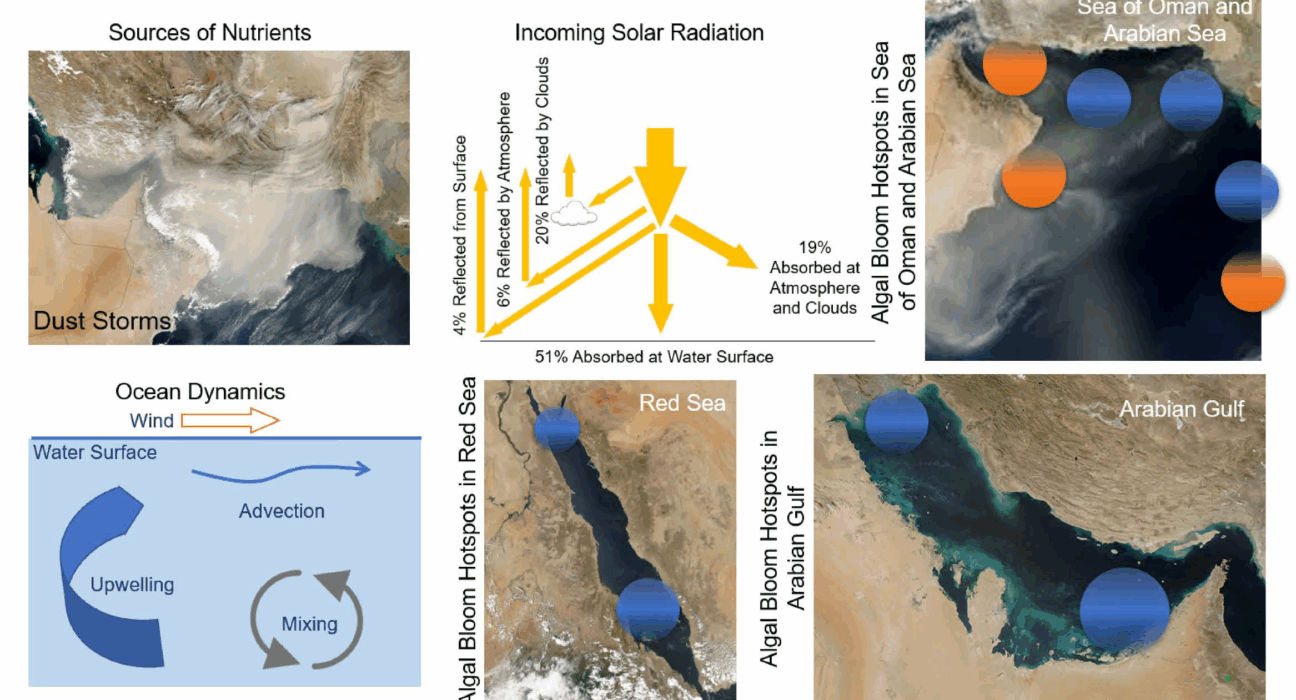
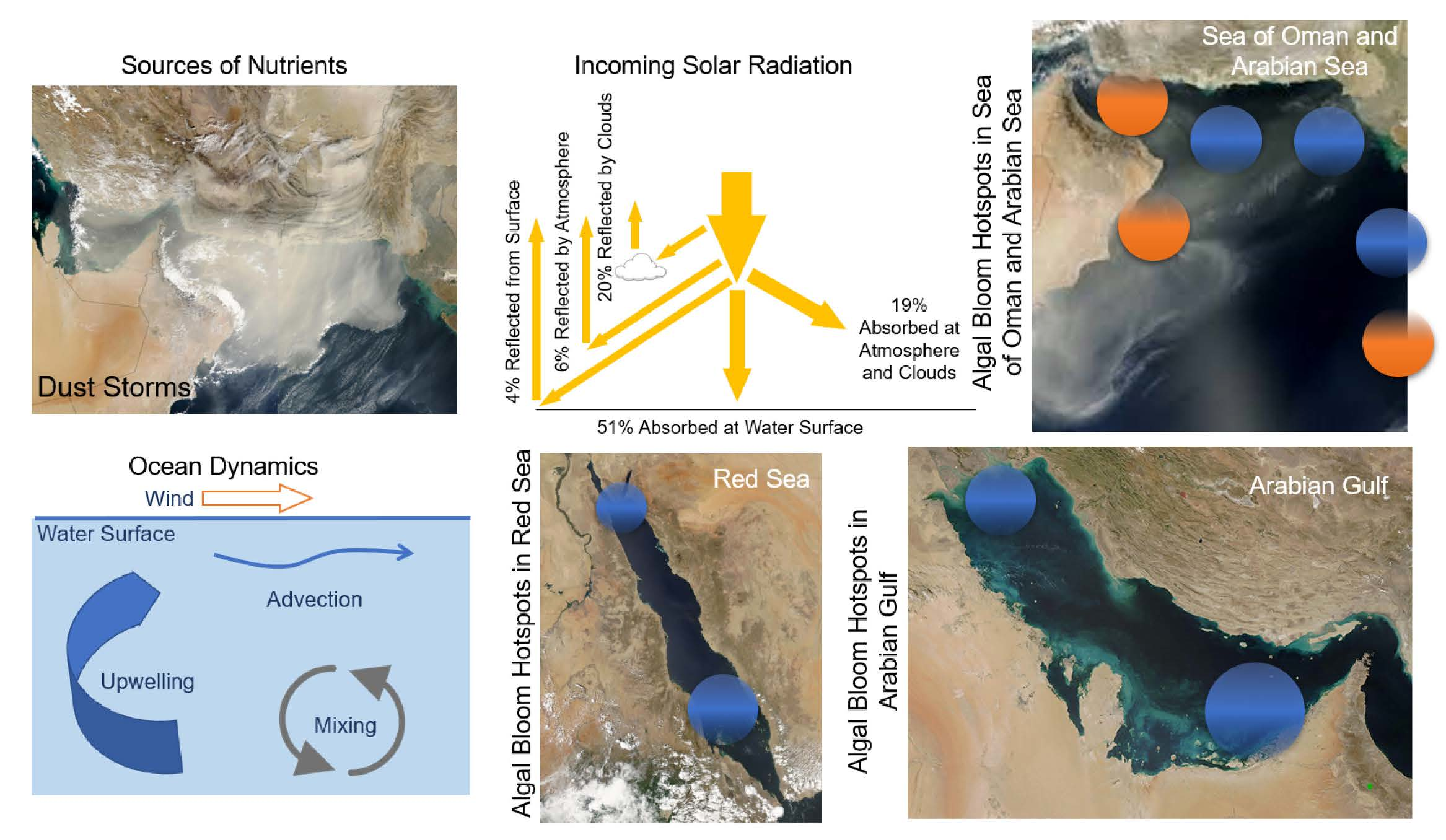
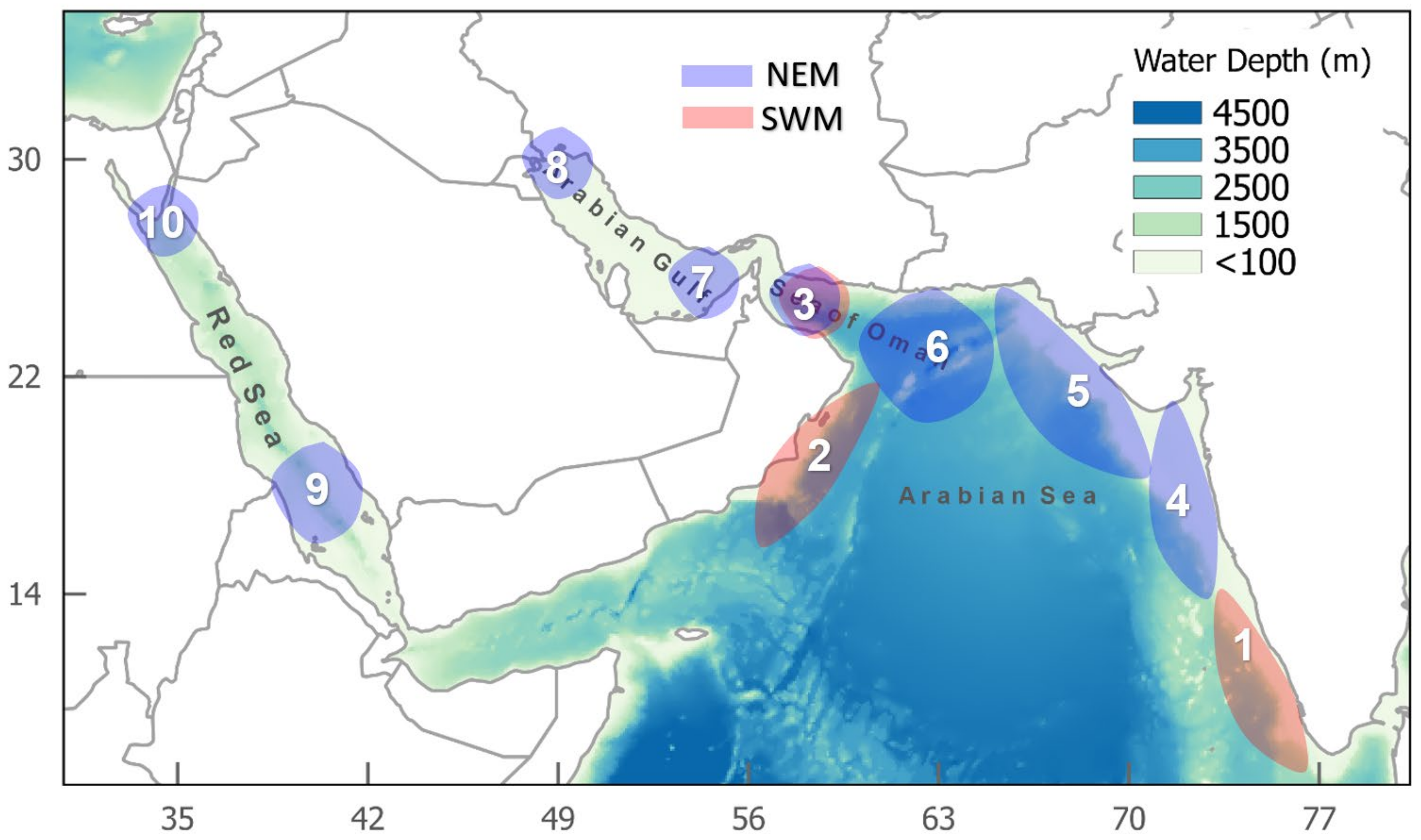
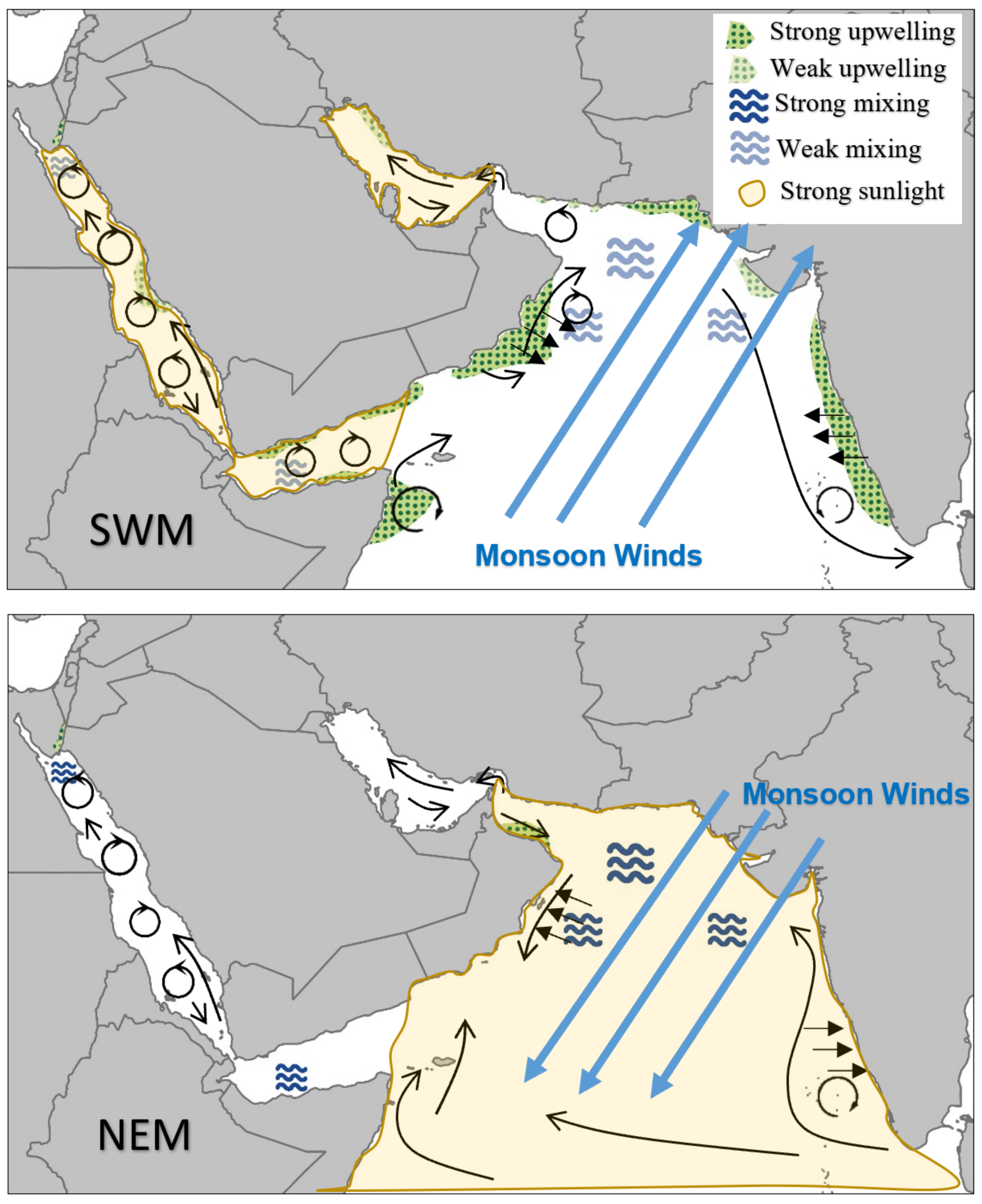
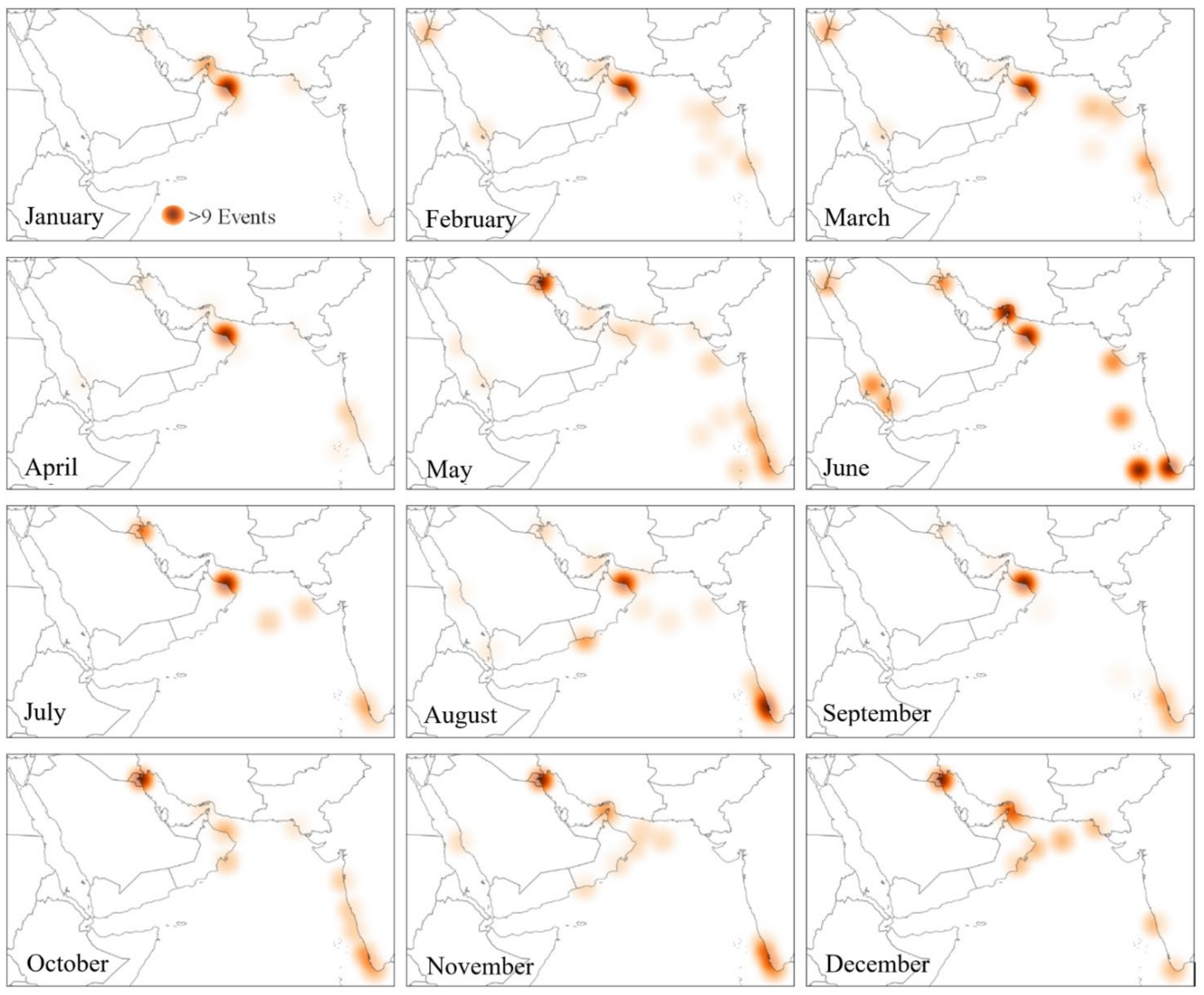
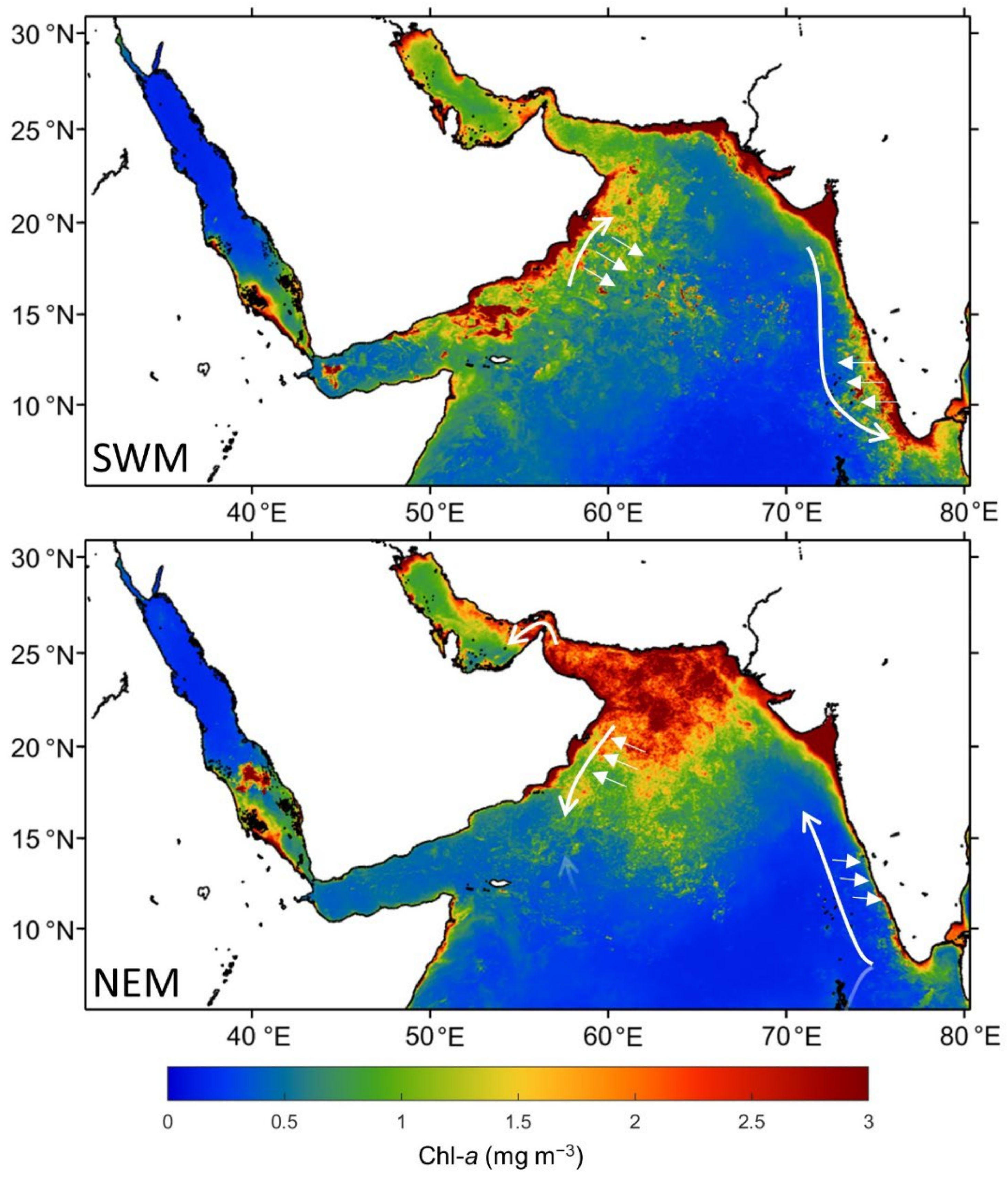
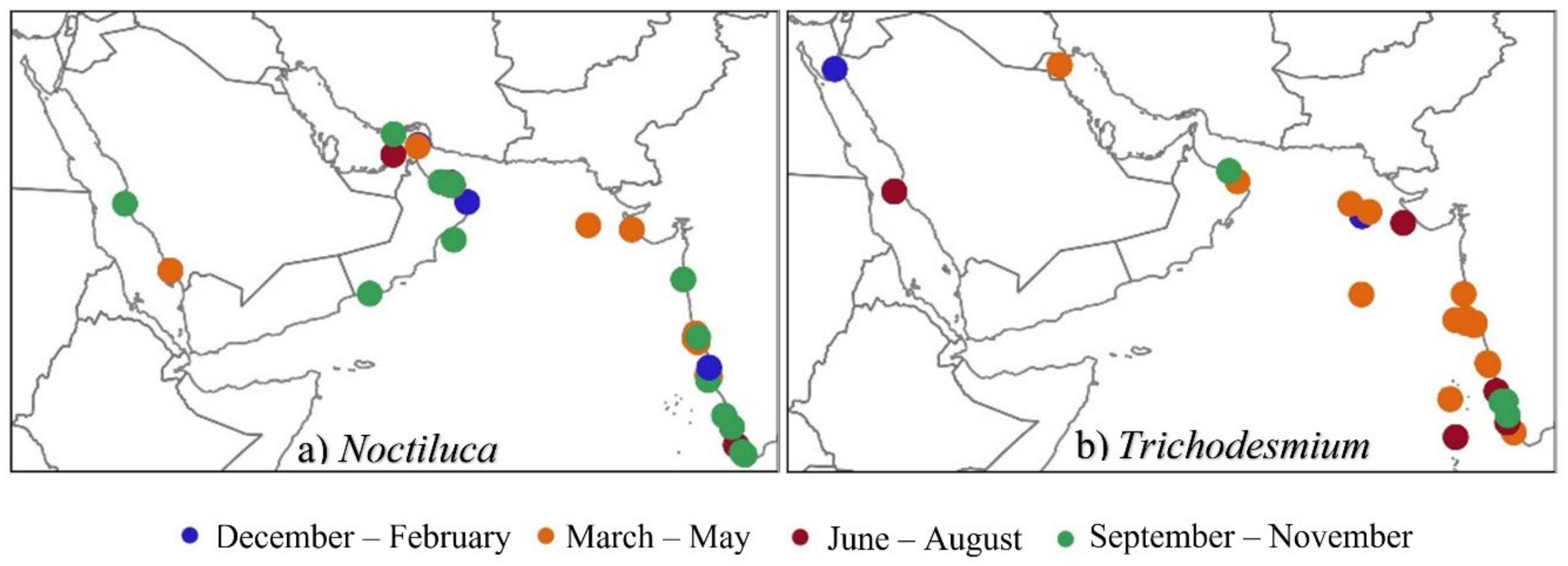
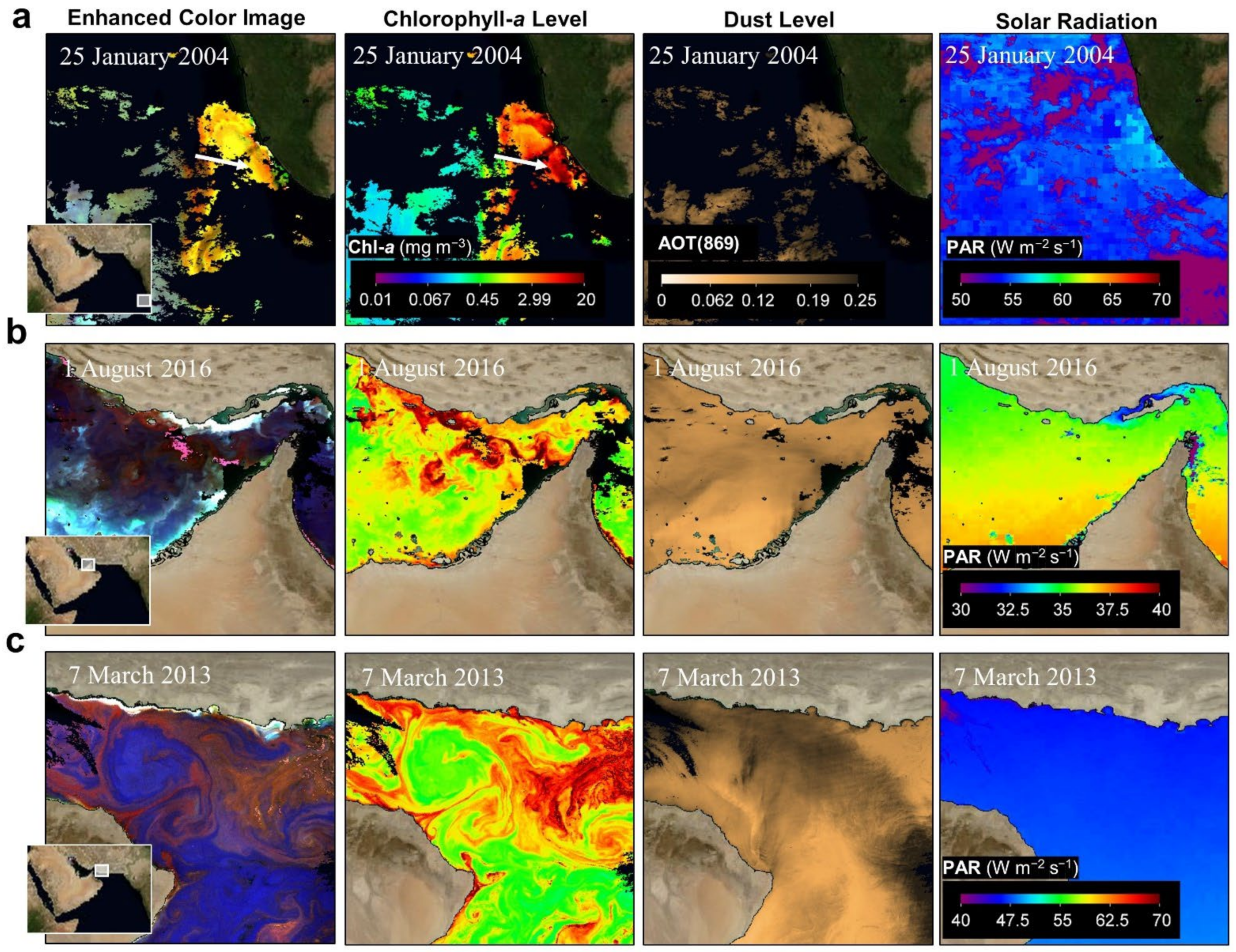
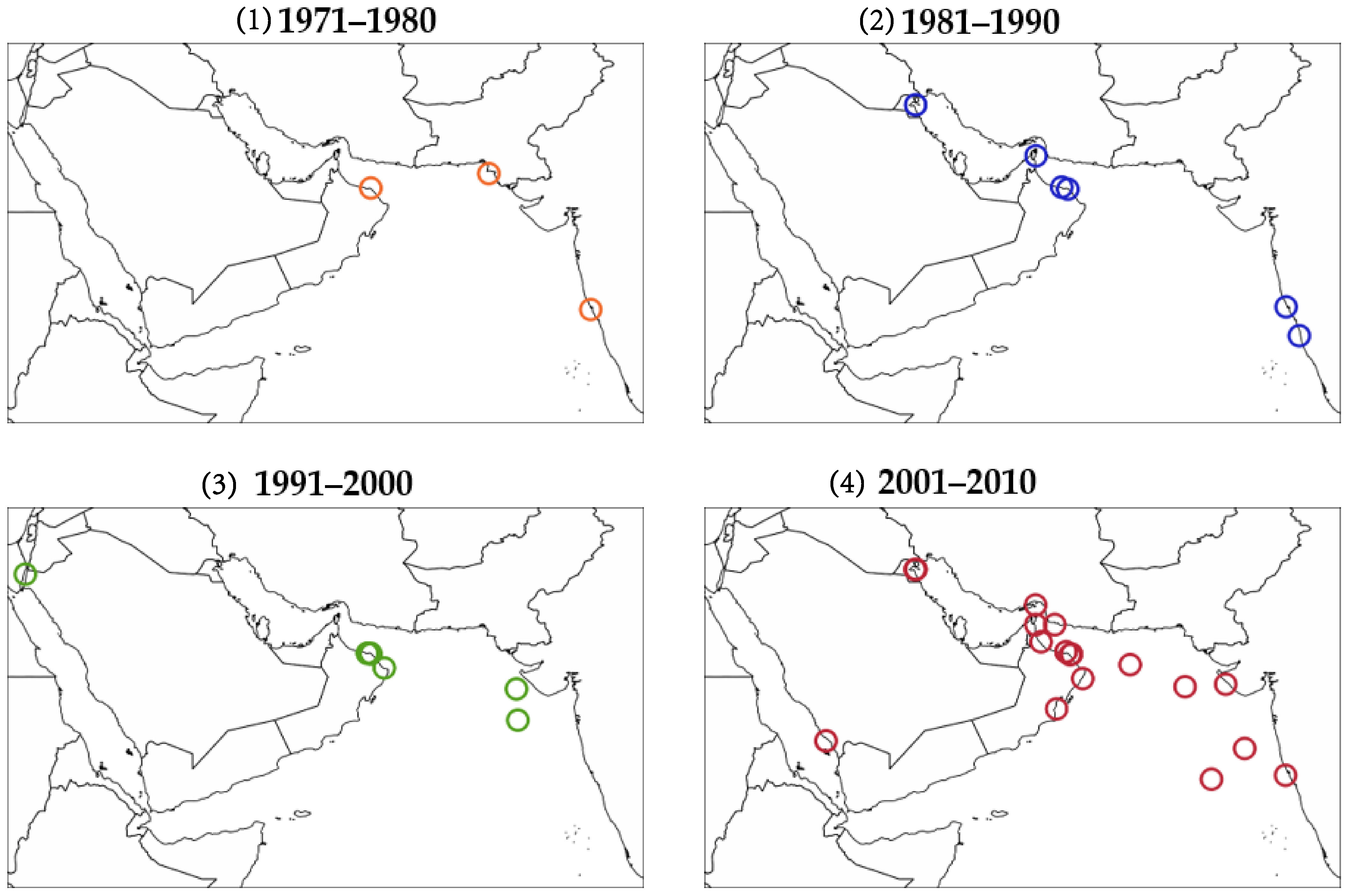
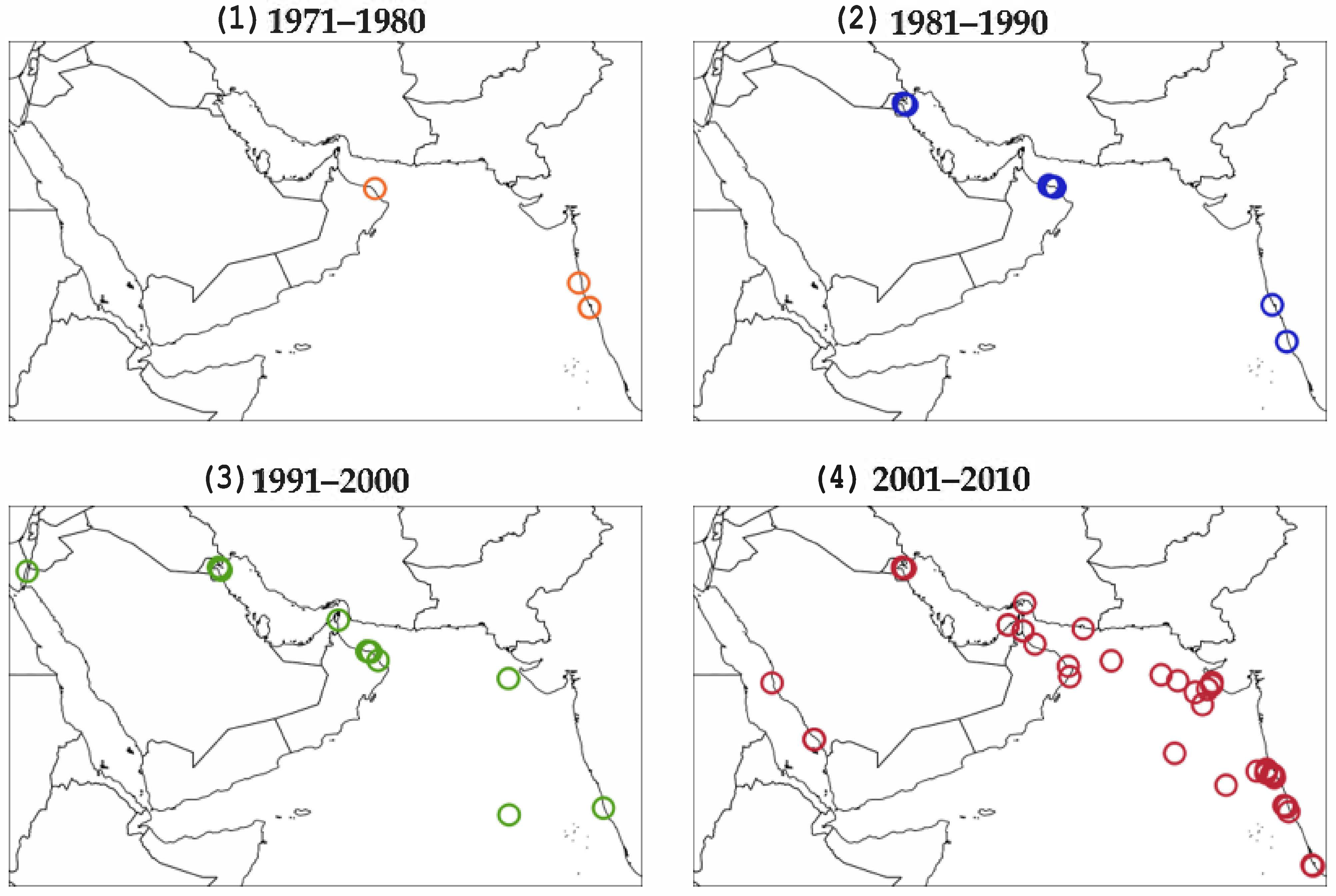
Algal blooms in the marginal productive seas of the Indian Ocean are projected to become more prevalent over the coming decades. They reach from lower latitudes up to the coast of the northern Indian Ocean and the populated areas along the Arabian Gulf, Sea of Oman, Arabian Sea, and the Red Sea. Studies that document algal blooms in the Indian Ocean have either focused on individual or regional waters or have been limited by a lack of long-term observations. Herein, we attempt to review the impact of major monsoons on algal blooms in the region and identify the most important oceanic and atmospheric processes that trigger them. The analysis is carried out using a comprehensive dataset collected from many studies focusing on the Indian Ocean. For the first time, we identify ten algal bloom hotspots and identify the primary drivers supporting algal blooms in them. Growth is found to depend on nutrients brought by dust, river runoff, upwelling, mixing, and advection, together with the availability of light, all being modulated by the phase of the monsoon. We also find that sunlight and dust deposition are strong predictors of algal bloom species and are essential for understanding marine biodiversity.
Keywords:
dust storms; productivity; Indian Ocean; climate change; phytoplankton
https://www.mdpi.com/2072-4292/14/10/2457?utm_source=chatgpt.com#