




Rising conflict-related pollution in the Strait of Hormuz could pose a serious risk to Bahrain’s marine ecosystem, particularly sharks that depend on the Arabian Gulf for breeding, feeding and migration, an environmental researcher has warned. Oil slicks, burning vessels, missile and drone debris, and possible chemical contamination are adding pressure to waters already affected by heat, salinity and heavy maritime activity. Because the Gulf is semi-enclosed and water movement is slow, pollutants entering through the Strait may remain in the region for years and could drift towards Bahrain’s shallow coastal habitats, where several shark species use nursery grounds.
Pollution risk in a vital waterway
The Strait of Hormuz carries about a fifth of the world’s oil shipments and is the Gulf’s only sea link to the Indian Ocean. Recent incidents have included reported oil slicks near Iran’s Qeshm Island, a tanker leak off Oman that satellite analysis indicated spread across more than 2,000 square kilometres, and fires aboard vessels following attacks.
Researcher Jenny Elliott-Bennett, who lived in Bahrain for nearly a decade and is pursuing doctoral work on Arabian Gulf sharks, said the Gulf’s circulation can take between two and five years to flush water out of the region.
Sharks face multiple pressures
At least 30 shark species are found in the wider Gulf, with several using Bahrain’s waters as nursery areas. Blacktip reef sharks, Arabian carpet sharks and milk sharks are among those recorded around the kingdom.
Oil pollution can block light, disturb plankton movement and reduce prey availability. Elliott-Bennett also warned that long-term exposure to toxins may affect sharks’ hunting ability, fertility and disease risk.
Migration routes and fisheries
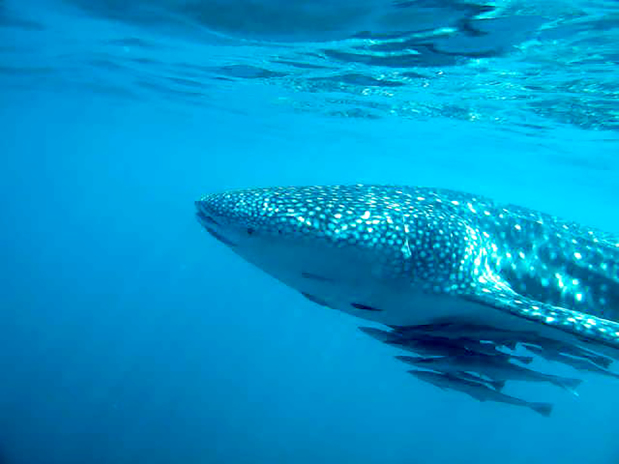
The Strait is also a key passage for migratory species, including endangered whale sharks. Their global numbers have fallen by more than half since the 1950s, largely because of bycatch and habitat loss.
While no official Bahrain study has yet linked the current crisis to local marine changes, fishermen in the region have reported reduced catches, which may suggest stressed fish populations.
Calls for stronger protection
Elliott-Bennett began studying Bahrain’s sharks after seeing them sold at fish counters. Her work documented threatened species in markets and landing sites and contributed to discussions on a proposed shark protection law with environmental authorities.