




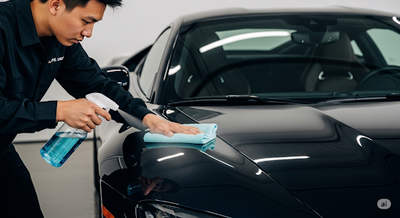
Gulf nations are increasingly adopting waterless car washes as a sustainable solution to combat water scarcity.
Driven by environmental concerns, government initiatives like Vision 2030, and consumer demand for
convenience, companies are offering mobile services that significantly reduce water consumption. This eco-
friendly approach aligns with the region’s push for sustainability and addresses the environmental impact of
traditional car washes.
The Gulf’s Growing Water Crisis and Car Culture
The Gulf region is synonymous with luxury cars, from Lamborghinis cruising through Dubai’s Sheikh
Zayed Road to Rolls-Royces spotted in Doha. Yet, this thriving car culture comes with an environmental
downside: traditional car washes consume thousands of litres of water per vehicle annually.
In water-scarce regions like the UAE and Saudi Arabia, this is increasingly unsustainable. The Gulf
countries rank among the world’s highest per capita water consumers. With such alarming statistics,
water conservation has become a national priority across the GCC.
This is where waterless car wash solutions are making inroads, not just as a novelty but as a necessity.
What Are Waterless Car Washes?
Waterless car washing involves using specialised biodegradable sprays and microfiber cloths to clean
the vehicle without the need for water. These sprays contain lubricants and cleaning agents that lift dirt
and grime, allowing them to be wiped away without scratching the surface.
The process not only saves water but is also faster and often more gentle on premium car finishes
compared to high-pressure water jets used in conventional washes.
Why the Trend Is Taking Off in the Gulf
Several factors are fueling the adoption of waterless car washes in the GCC:
- Water Scarcity Pressures: Desalination provides most of the Gulf’s water supply, which is energy-intensive and costly. Minimising water use is crucial.
al factors are fueling the adoption of waterless car washes ..