




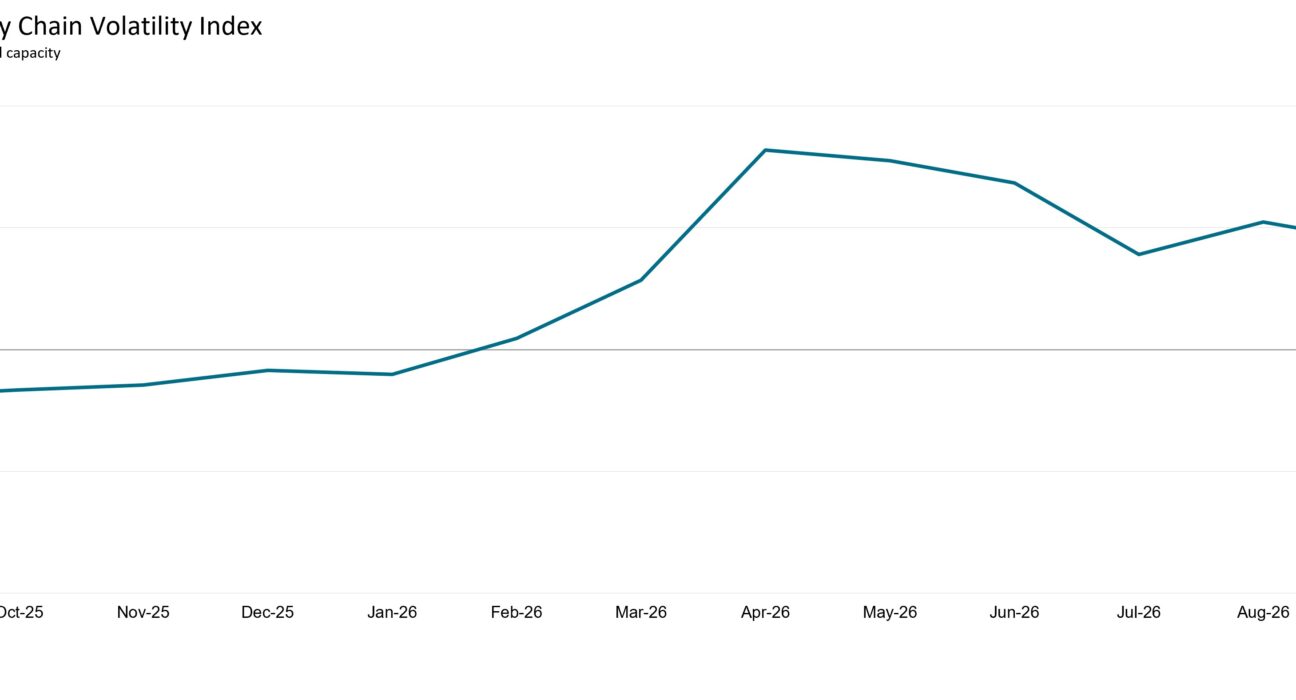
Global manufacturers increased orders for raw materials, commodities and components in September, signaling stronger factory activity heading into the fourth quarter. The latest GEP Global Supply Chain Volatility Index, based on monthly survey data from about 27,000 companies, showed input demand rising to its strongest level since May and moving close to its highest point of 2026. Buying improved across North America, Asia and Europe, with notable acceleration in the United States, Germany, Taiwan and South Korea. However, the rebound in purchasing came alongside fresh signs of strain, including the first increase in material shortages since May and a renewed rise in transportation costs.
Demand Improves Across Major Regions
The index indicated that manufacturers in several large industrial economies are preparing for firmer production. Growth in purchasing was broad-based, reflecting improved underlying demand rather than isolated restocking. Stronger factory buying was especially evident in the U.S. and key Asian export economies, while Germany also contributed to the upswing in Europe.
Regional Index Readings Diverge
Asia recorded the highest reading among the major regions, rising to 1.49 from 1.24, a three-month high. North America climbed to 1.13 from 0.87, its strongest level since June. Europe moved in the opposite direction, falling to 0.66 from 1.27, while the U.K. declined to 0.59 from 1.10 as manufacturers reduced stockpiling.
Shortages and Transport Costs Rise
Supply conditions tightened as shortages of critical inputs worsened, particularly for oil and petroleum-based products. Higher oil prices also pushed global logistics costs upward, marking the first average increase in transportation prices since April. At the same time, labor constraints eased, with fewer firms reporting order backlogs caused by staffing shortages.
Inventory Strategy Remains Cautious
Reports of companies adding safety stock declined further from their June peak, but inventory buffers remained high by historical standards. Procurement teams appear to be balancing stronger demand against concerns over inflation, supply availability and cost control as the fourth quarter begins.