




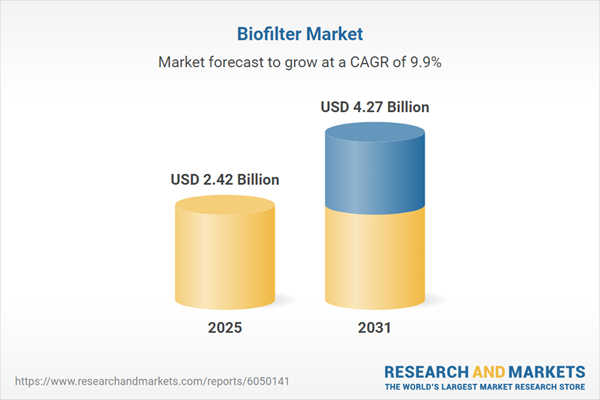
The biofilter market is on track for robust expansion, with forecasts indicating a growth from USD 2.42 billion in 2025 to USD 4.27 billion by 2031. This nearly 10% compound annual growth rate is attributed to the increasing adoption of biofiltration in aquaculture and industrial emission control. These systems leverage microorganisms to biologically cleanse air and water, making them essential to sectors facing environmental scrutiny.
Growth in Aquaculture and Fisheries
One of the central forces behind market acceleration is the uptake of recirculating aquaculture systems (RAS). These setups require biofilters to manage water quality by eliminating harmful compounds like ammonia. With aquaculture surpassing wild catch in global fish production, stakeholders are turning to biofilter technologies to maintain operational efficiency. In 2022, aquaculture production hit a peak of 130.9 million tonnes, reflecting this structural shift.
Environmental Regulations Fueling Adoption
Regulatory pressure is intensifying worldwide, with governments mandating reductions in volatile organic compounds and nutrient discharge. North America, especially the United States, is investing heavily in upgrading wastewater management systems. According to the EPA, around $630 billion in infrastructure updates will be needed over the next two decades, offering lucrative opportunities for sustainable filtration providers.
Operational Hurdles Remain
Despite the promising outlook, the market faces implementation challenges. Biofilters rely on sensitive biological processes that can destabilize under fluctuating pH, humidity, or temperature. This complexity demands continuous monitoring and skilled labor, both of which are under strain in the water treatment sector. Workforce shortages compound the difficulty of ensuring optimal system performance, particularly in resource-constrained regions.
Emerging Technological Trends
The integration of AI and IoT into biofilter systems is transforming maintenance and performance monitoring. Automated sensors and dynamic control mechanisms provide real-time adjustments, reducing the risk of microbial failure. Suppliers like Veolia are capitalizing on this trend, with their digital water technologies showing notable revenue growth.
Another emerging application is the use of biofilters in upgrading biogas. As renewable energy gains traction, these systems are increasingly employed to remove hydrogen sulfide from biogas streams, enabling more efficient conversion to natural gas. Europe’s biogas sector highlights this shift, producing over 22 billion cubic meters in 2024 alone.
Key Industry Players
Leading companies in the biofilter sector include Dow Inc., Xylem Inc., Mitsubishi Heavy Industries, WesTech Engineering, BASF SE, and Thermo Fisher Scientific. These firms are actively expanding portfolios to address growing demand in water, aquaculture, and renewable energy verticals.