




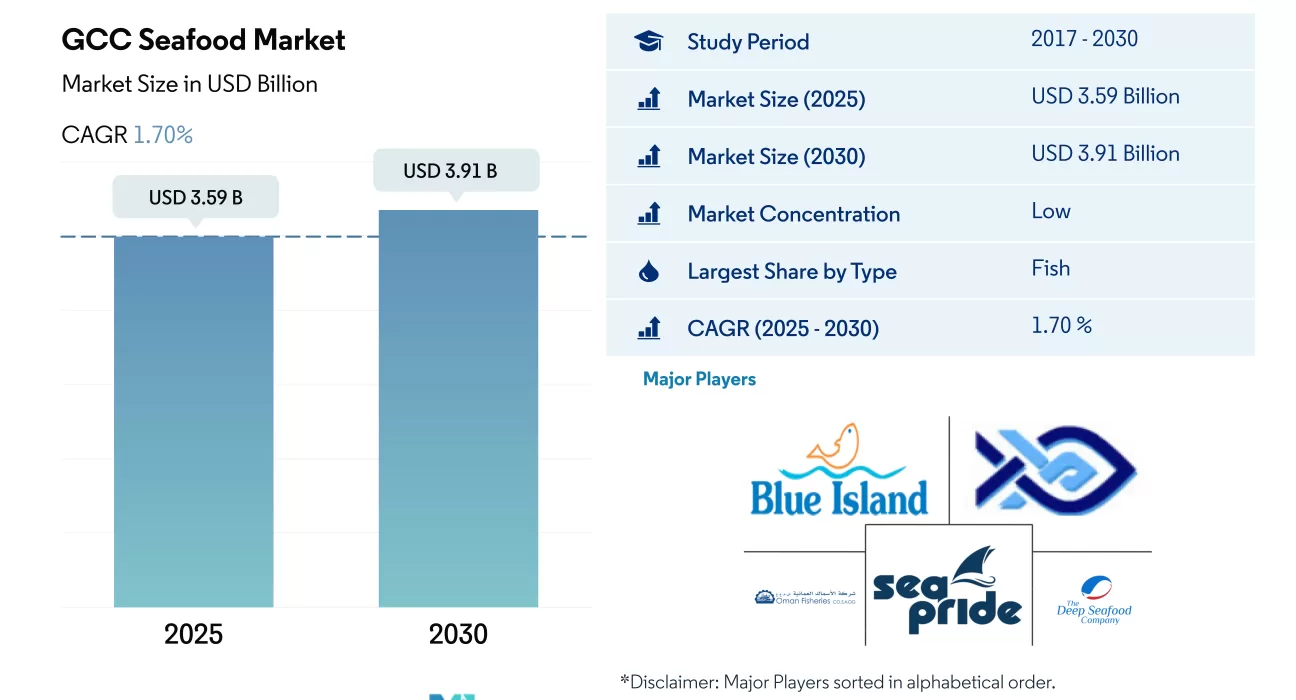
The Gulf Cooperation Council (GCC) seafood market is poised for notable expansion, projected to grow from an estimated USD 3.59 billion in 2025 to USD 3.91 billion by 2030, at a Compound Annual Growth Rate (CAGR) of 1.70%. This upward trajectory is significantly influenced by a blend of changing demographics, a rising focus on healthy eating, and crucial investments in regional infrastructure. Local production initiatives, supported by governments aiming for food security, are also playing a vital role in shaping the market’s future, reducing import reliance and striving for price stability.
Market Drivers and Infrastructure Boost
The diverse population of the GCC, particularly the UAE with its high number of expatriates, contributes to varied culinary demands and increased seafood consumption. This trend aligns with a growing health consciousness, as consumers seek seafood as a healthier protein alternative amidst concerns like rising obesity rates. Infrastructure developments, such as new cold storage facilities by companies like Maersk in Dubai and advanced warehouses in Abu Dhabi, are essential for maintaining product quality and supporting the expanding foodservice sector. This sector is seeing robust growth, exemplified by restaurant chains planning significant regional expansions.
Local Efforts and Price Trends
Governments across the GCC are championing self-sufficiency in seafood production. Saudi Arabia, already the largest fish producer in the Middle East, continues to invest heavily in its National Fisheries Development Program to boost output, with similar aquaculture initiatives seen in the UAE. Despite these efforts, fish prices in the region, particularly in the UAE, can be higher due to demand surpassing supply, climatic conditions, and broader economic factors like oil prices and inflation. Authorities have introduced relief measures to counteract these price increases.
Key Segments and Regional Leaders
Fish remains the dominant seafood type in the GCC, integral to traditional diets and enjoying high consumption rates. While fresh and chilled forms lead the market, the processed seafood segment is experiencing the fastest growth, driven by demand from working professionals seeking convenient meal options. Geographically, the United Arab Emirates commands the largest market share, leveraging its vibrant expatriate community and robust tourism. Bahrain, meanwhile, shows the fastest growth, propelled by strategic aquaculture investments and sustainable practices.