




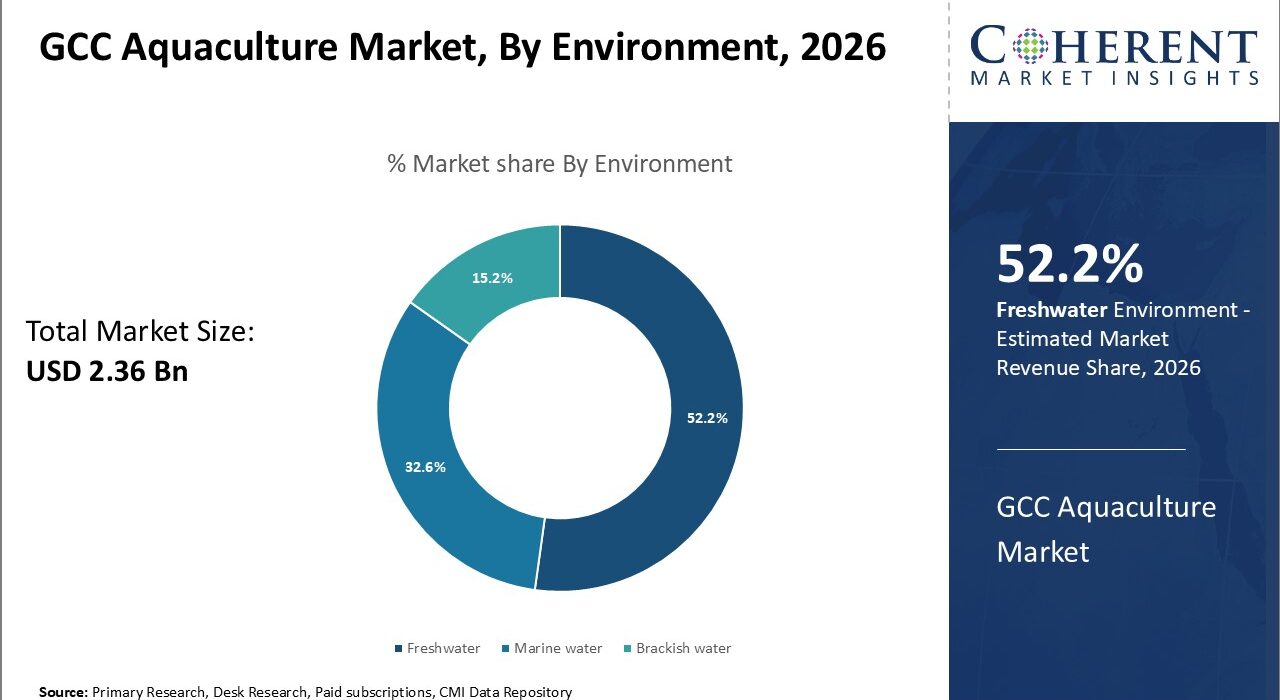
The GCC aquaculture sector is set to expand steadily over the coming years as the region works to secure food supplies and reduce reliance on imports. Market estimates place the industry at USD 2.36 billion in 2026, with expectations that it will climb to USD 3.78 billion by 2033. The forecast period indicates a 6.9% compound annual growth rate (CAGR) from 2026 to 2033.
Demand-side momentum is closely linked to rising consumer interest in protein-rich seafood and growing health awareness, while supply-side efforts are being shaped by technology upgrades and policy initiatives. Across the GCC, aquaculture producers are increasingly adopting advanced systems aimed at boosting output and improving sustainability.
Market growth outlook and key figures
According to the market analysis, the sector’s value is expected to reach USD 3.78 billion by 2033 after starting at USD 2.36 billion in 2026. Growth is supported by modernization of farming practices and wider participation by both established and emerging operators.
Leading segments: freshwater and cyprinids
In 2026, the freshwater environment is forecast to dominate the market, accounting for 52.2% of revenue share. The strength of freshwater farming is linked to easier access to suitable water sources and comparatively lower operating complexity than marine or brackish setups.
By fish type, carps, barbels, and other cyprinids are projected to lead with a 20.7% share in 2026. The report attributes this to species resilience, ability to perform across a range of water conditions, and strong acceptance in local markets.
Technology and policy are reshaping production
A major trend is the increased use of advanced aquaculture methods such as recirculating aquaculture systems (RAS) and integrated multi-trophic aquaculture (IMTA). These approaches are designed to enhance yields while reducing environmental pressures.
At the same time, government programs supporting food security and encouraging private investment are expected to accelerate market expansion. Consumers’ preferences for fresher and higher-quality seafood are also pushing producers toward product diversification and operational upgrades.
Barriers include sustainability and freshwater constraints
Despite positive momentum, growth faces challenges. The analysis highlights environmental concerns related to aquaculture practices and limited availability of freshwater resources as restraints. On the microeconomic side, issues such as disease management and biosecurity requirements can affect production stability and costs.
- Base year: 2025
- Historical data: 2020–2024
- Forecast period: 2026–2033
- Major players include: NAQUA, Gulf Aquaculture (Balghailam Fish Farm LLC), Abudawood AlSaffar Company, Omega Farms LLC, and Crown Farms