




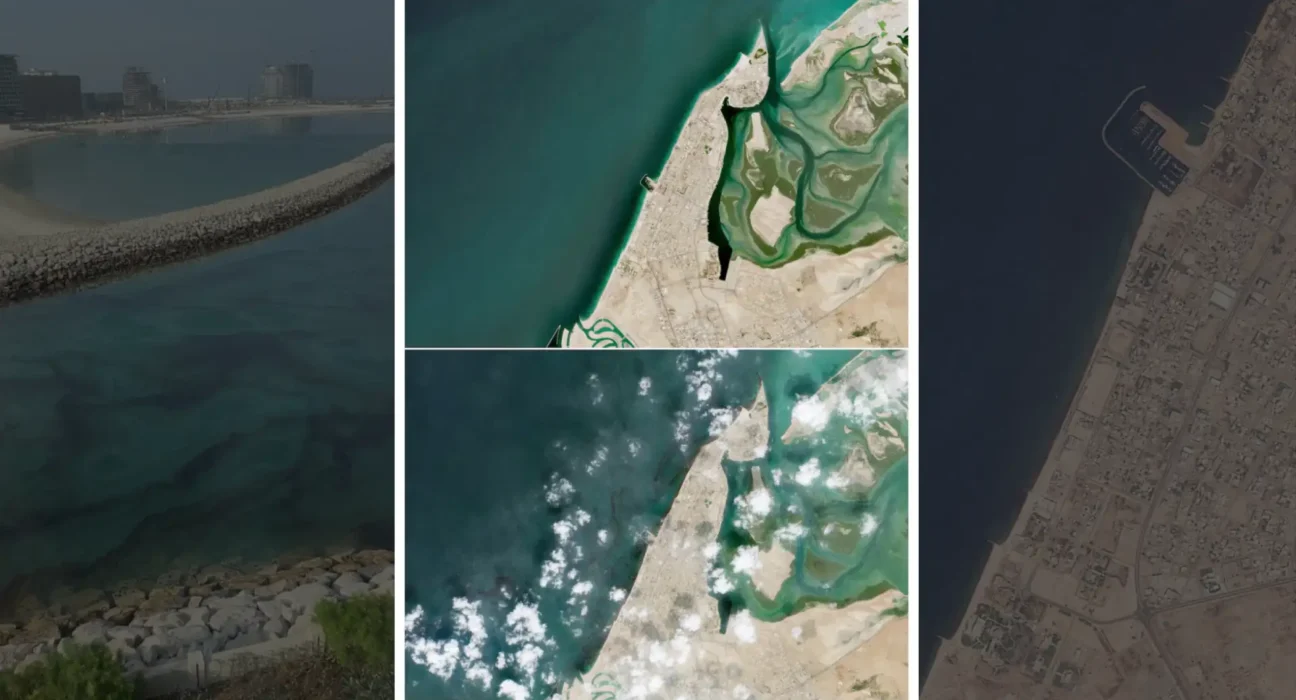
DUBAI, October 29 – An oil spill off the United Arab Emirates that has prompted temporary restrictions on fishing and on access to several beaches has raised concerns over the risk of environmental contamination and the potential impact on desalination plants.
WHAT ARE THE MAIN ENVIRONMENTAL CONCERNS?
The spill is from a vessel that shipping sources have identified as crude oil tanker Gem No.2, which they said an unidentified projectile struck last month 13 nautical miles west of Al Jazeera, in the Ras Al Khaimah emirate.
Residents in some northern emirates had posted on social media about strange odours, but authorities said last week they posed no health risks.
On Wednesday, authorities in Sharjah were the latest to close all beaches as a precaution.
Repeated attacks on commercial vessels since the start of the US-Israeli war with Iran have heightened fears over the conflict’s environmental impact.
The incident off the UAE has also raised questions about what impact oil spills can have on desalination plants, which crowd the Emirati coastline and, just as in other Gulf countries, are a supplier of water.
In the UAE, desalinated water accounts for more than 80% of potable water. Major plants include those at Dubai’s Jebel Ali industrial port, and at Taweelah between Abu Dhabi and Dubai.
Gulf desalination plants had already come under threat from direct hits in the conflict earlier this year.
Maritime intelligence firm Windward said on Sunday that the leak threatened the seawater intake of the Naqa’a desalination plant at the border between Umm Al Quwain and Ras Al Khaimah.
Footage verified by Reuters showed that the oil slick had reached a location in Ras Al Khaimah about 2 kms (1.24 miles) from the plant.
Water analysts told Reuters that it was hard to assess the potential impact on desalination plants without more information on the extent of the spill. So far, the UAE has not announced any shutdowns of plants.
The UAE Ministry of Climate Change and Environment, Ras Al Khaimah Media Office and the Naqa’a plant did not immediately respond to requests for comment.
WHAT’S THE LEVEL OF RISK FROM THIS SPILL?
Any oil spill has the potential to impact the environment, but the extent of the damage depends on the type of oil and the volume, said Simon Boxall, a senior lecturer at the University of Southampton.
Satellite technology can help identify oil slicks floating on the sea’s surface but does not provide an indication of how thick that layer is, he said.
“Crude oil in particular is a natural product. And so crude oil will break down in the marine environment, particularly in the warm waters such as the Gulf, within a matter of a few weeks,” he said.
“A thicker spill obviously carries more oil, and when it hits the beaches, when it hits the marine environment, both at sea, on the seabed, and on the coast, then it has a potential to cause more damage. It will eventually break down, but that does take time.”
For wildlife, it can be fatal.
Crude oil on water destroys the ability of birds to repel water and can hinder their ability to fly. Other wildlife, including sea turtles and dolphins, can mistake crude oil for food and might inhale it, while fish can suffer organ and egg damage, the US National Oceanic and Atmospheric Administration, or NOAA, said.