






Bahrain’s future in agriculture looks bright after the Student Agricultural Innovations Expo 2025, held at Bahrain Polytechnic. The event highlighted student-led projects designed to tackle local environmental challenges with innovative solutions. His Excellency Dr. Mohammed bin Mubarak Juma, Minister of Education, and Eng. Wael bin Nasser Al Mubarak, Minister of Municipalities and Agriculture, were among the attendees, engaging with students and examining their prototypes.
AI-Driven Plant Monitoring
Students from New Vision School introduced AgroGuard, an AI-powered robot designed to monitor plant health. Using a camera, the robot analyzes foliage, detecting signs of nutrient deficiency, fungal infections, or dryness. Upon detecting an issue, AgroGuard triggers relevant treatments, addressing Bahrain’s challenges of high temperatures and limited water resources by enabling early intervention and reducing crop losses.
Water Recycling and Soil Analysis
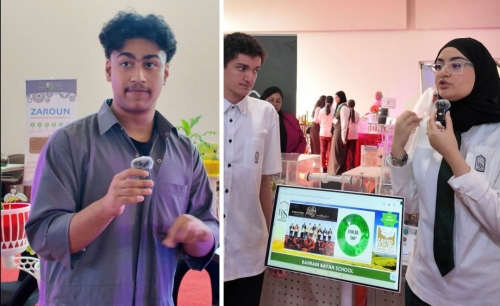
Bayan Bahrain School presented Eco-Lab 360, a sustainability lab that recycles grey water from the kitchen for campus plant irrigation. The system recycles approximately 3,000 liters of water monthly. They also demonstrated a soil-analysis app, providing users with crop, irrigation, and fertilizer recommendations based on soil data. The team plans to incorporate robotic automation to simplify home and small-scale gardening.
Vertical Hydroponic Systems
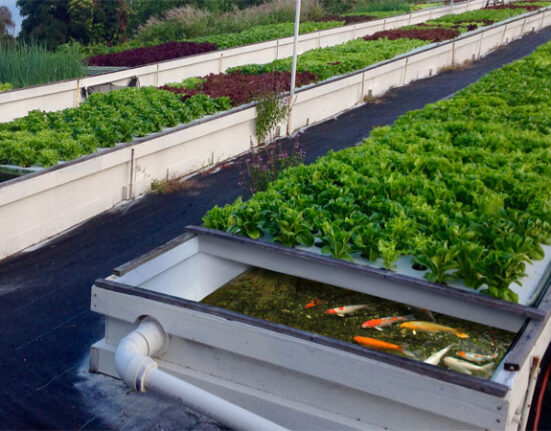
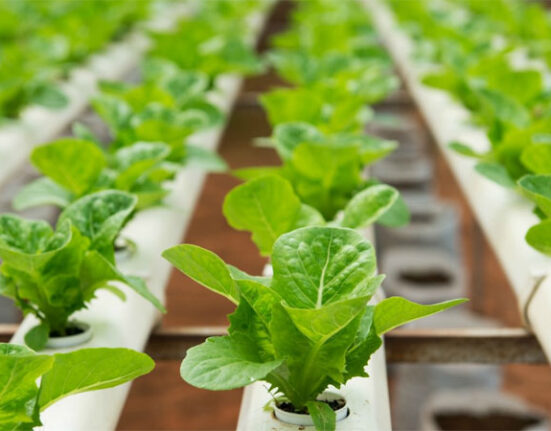
Al Hikma School showcased Harvest Heights, a vertical hydroponic system designed for maximizing production in limited spaces. The system supports 36 plants, using solar panels to power pumps that deliver water and nutrient solutions. Students emphasized its suitability for Bahrain’s limited arable land and arid conditions, offering a compact model for urban and school gardens.
Focus on Practicality
The expo highlighted a common theme: students focused on practical solutions tailored to Bahrain’s specific challenges, emphasizing efficiency and sustainability. The ministers engaged with the teams, offering encouragement and discussing potential scaling of their projects, highlighting the real-world applicability of these classroom innovations.
Leave feedback about this