




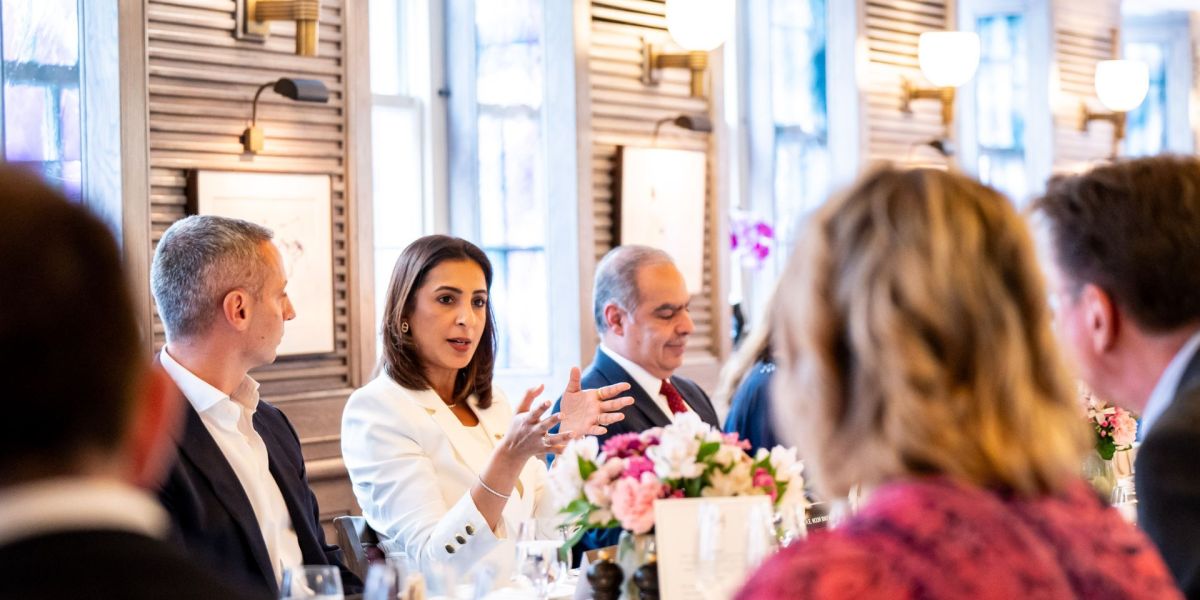
Bahrain is sharpening its pitch to global investors as Gulf economies compete more aggressively for capital, talent and multinational expansion. Rather than trying to match larger neighbors with vast projects and headline-grabbing deal sizes, the kingdom is emphasizing speed, specialist regulation and targeted sectors. H.E. Noor bint Ali Alkhulaif, chief executive of Bahrain’s Economic Development Board and Minister of Sustainable Development, has framed the country’s smaller scale as an advantage, arguing that it allows Bahrain to move quickly and focus on areas where it can offer clear value. The strategy centers on five priority sectors: financial services, manufacturing, logistics, tourism and information and communications technology.
Finance and regulation lead the push
Financial services have become a major pillar of the economy, overtaking oil as the largest contributor to real GDP in the third quarter of 2025 and accounting for 17.6% of GDP that year. Bahrain is now seeking more wealth managers, asset managers and family offices, particularly from Europe and Asia.
The country has also been updating trust rules, residency programs and financial regulation, while drawing lessons from established hubs such as Switzerland, Singapore, Jersey and Guernsey. Bahrain previously launched the Gulf’s first fintech regulatory sandbox in 2017 and has moved early on open banking, crypto oversight and stablecoin rules.
Technology focus shifts to resilience
Amazon Web Services has played a central role in Bahrain’s digital ambitions, operating two Cloud Innovation Centers in the country. Bahrain has also promoted AI training and digital skills programs, while its 2018 Data Embassy law allows foreign organizations to host data locally while keeping it under their home-country legal jurisdiction.
Recent regional attacks on cloud infrastructure have pushed discussions beyond data sovereignty toward operational resilience. Officials say investor interest has largely held up, though tourism, manufacturing and logistics have required renewed attention.
Manufacturing and trade opportunities
Manufacturing remains central to Bahrain’s investment plan. Existing industrial zones host companies including Mondelēz, BASF, Arla and Reckitt, while planned areas such as the U.S. Trade Zone and Aluminum Downstream Cluster are designed to attract manufacturers and logistics firms serving the wider region.
Looking beyond diversification
Bahrain is also preparing to use the U.K.-GCC free trade agreement, signed in May after four years of talks, to deepen cooperation in manufacturing, aluminum, energy, life sciences and healthcare. With about 85% of GDP now coming from non-oil activity, officials are already considering what a longer-term Vision 2050 agenda could include, with a focus on productivity, higher-value growth and a clearer global identity for Bahrain as an investment destination.