


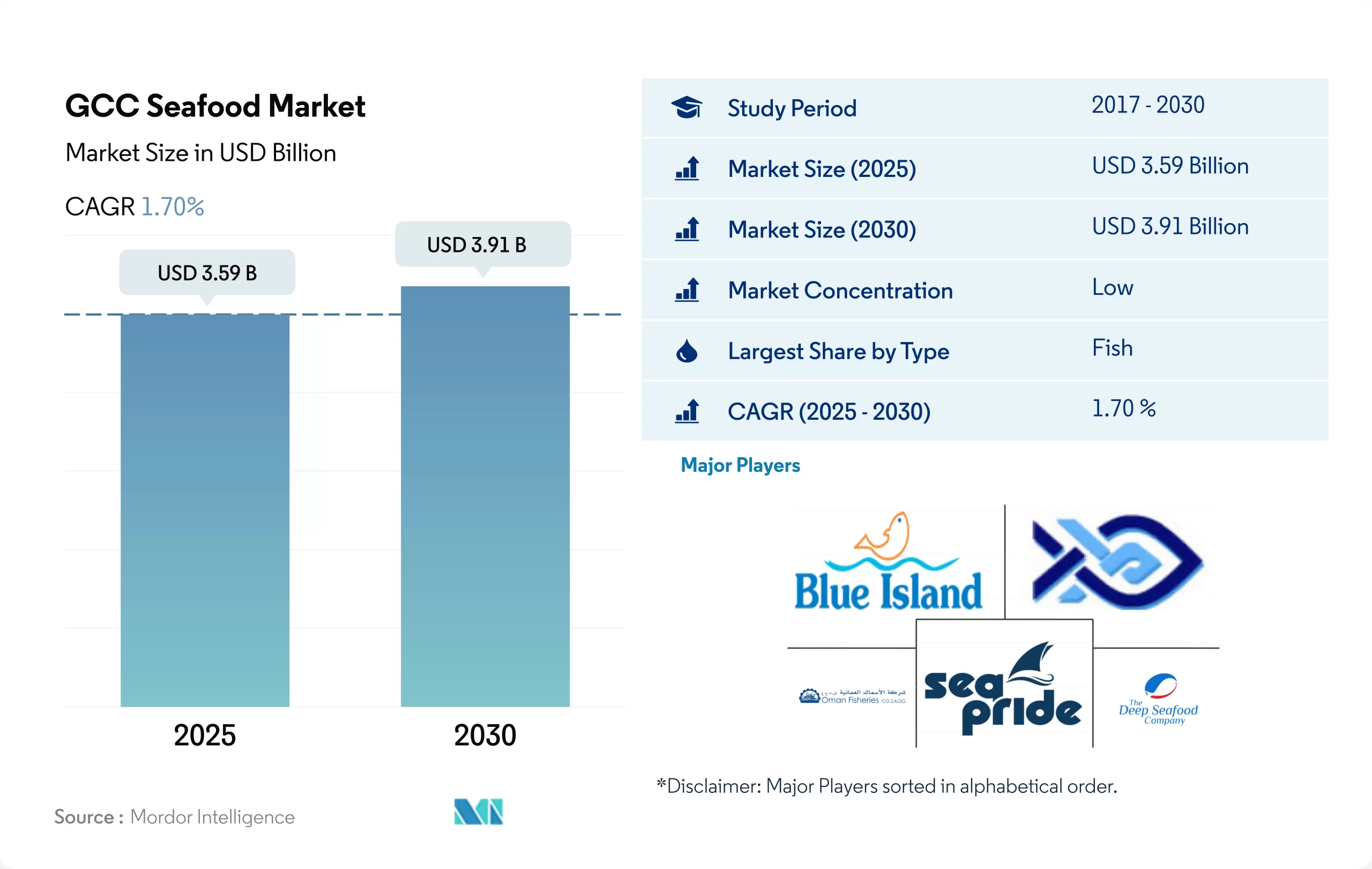
The Gulf Cooperation Council (GCC) seafood market is anticipated to expand steadily, projected to reach USD 3.91 billion by 2030 from an estimated USD 3.59 billion in 2025, demonstrating a compound annual growth rate of 1.70% over the forecast period. This growth reflects the region’s dynamic consumption patterns, shaped by evolving demographic trends and a heightened focus on health and sustainability.
Market Drivers and Evolving Preferences
The market’s expansion is primarily fueled by the GCC’s diverse demographic landscape. In the UAE, for instance, a significant expatriate population contributes to varied culinary demands and increased seafood consumption. Growing health consciousness, particularly in response to rising obesity rates in some GCC nations, is steering consumers towards fish and seafood as a healthier protein alternative. Investments in robust cold chain logistics, including new storage facilities in Dubai and Abu Dhabi, are enhancing product quality and distribution. The foodservice sector also plays a crucial role, with major restaurant chains expanding their presence and offering diverse seafood cuisines, supported by government initiatives like financial aid and tax relief.
Focus on Local Production and Price Dynamics
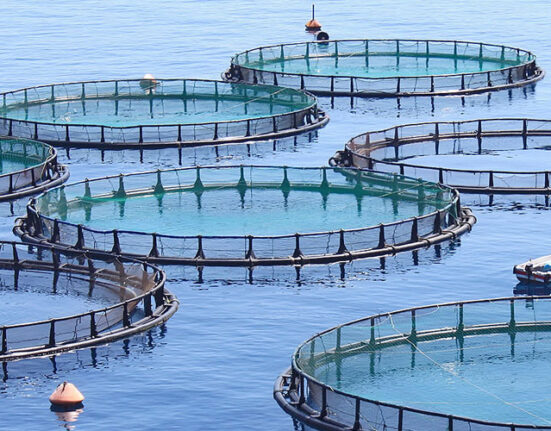
Governments across the GCC are actively promoting self-sufficiency and sustainable practices within the fisheries sector. Saudi Arabia leads as the Middle East’s largest fish producer, with its National Fisheries Development Program aiming to significantly boost aquaculture output to 600,000 tons by 2030 through private sector involvement and research investments. Despite high per capita consumption, the UAE’s local fisheries are overfished, making the country heavily reliant on imports. Seafood prices in the region, particularly in the UAE, are influenced by high import dependency and strong consumer demand, with global factors like rising oil prices and inflation also contributing to increased costs.
Key Segments Driving Growth
Fish remains the dominant seafood type in the GCC, capturing roughly 73% of the market share, while shrimp is projected to be the fastest-growing segment, anticipated to expand at approximately 3% annually. Fresh and chilled seafood constitute the largest form category, holding a 57% market share, favored for traditional dishes and protein-rich diets, while processed seafood shows dynamic growth, projected at a 4% CAGR, catering to the rising demand for convenient meal solutions. The on-trade sector (restaurants and hotels) accounts for the majority of distribution with a 55% share, though the off-trade channel (supermarkets and online sales) is expanding rapidly due to increasing e-commerce adoption and internet penetration.
Regional Market Contributions
Geographically, the United Arab Emirates holds the largest market share in the GCC seafood market, accounting for approximately 38% in 2024, driven by its large expatriate population and strong tourism sector. Bahrain is projected to be the fastest-growing market, with an anticipated 2% CAGR, largely due to its strategic focus on aquaculture development and government initiatives to boost local production. Saudi Arabia, Oman, Kuwait, and Qatar are also making significant contributions, investing in their respective aquaculture sectors and implementing sustainable fishing practices to achieve greater food security.
Competitive Landscape and Future Outlook
The GCC seafood market is characterized by a fragmented competitive landscape, comprising both established local players and international companies. Key local entities such as The Deep Seafood Company and Sea Pride LLC maintain strong market positions through extensive networks. The industry prioritizes strategic partnerships over mergers and acquisitions, with a strong emphasis on investment in modern processing facilities, cold chain infrastructure, product differentiation, and sustainable practices. Recent developments include the Gulf Japan Food Fund’s investment in Oman Fisheries Co. SAOG and strategic distribution agreements, indicating a push towards global expansion and broader market reach.
Leave feedback about this