




Poultry

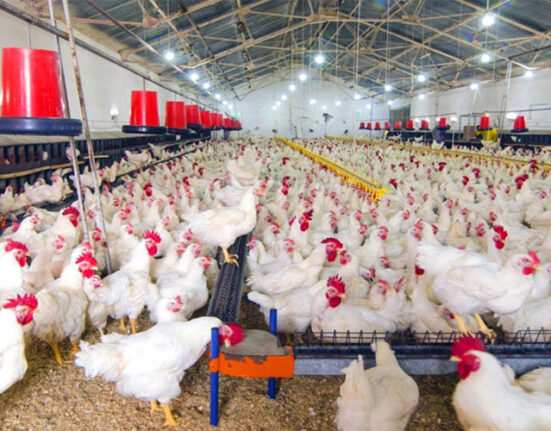
A 2015 article reported that Bahrain's heavy reliance on poultry imports due to subsidy cuts resulted in a crisis among Bahraini poultry farmers. As will be shown in the graphs below, Bahrain imports 90% of its chicken. With subsidy cuts by the Bahraini government, local chicken prices have increased. As a result, alternative chicken brands such as that provided by Saudi, have monopolised Bahrain’s local market.

Unlike Bahrain, the Saudi government provides farmers with subsidised resources and free land, and, thus, are able to supply their chicken for much cheaper than Bahrain - hence, the competition between the two types of brands. Thus, what becomes clear is that the rise in Bahraini chicken prices due to subsidy cuts implemented by the government, has led to a higher demand for cheaper alternatives - which is why Bahrain heavily relies on poultry imports.

In fact, due to a government regulation declaring that all chicks must be vaccinated twice during its early days of birth, there is a risk of Bahraini eggs experiencing an overdose, reducing its life expectancy and, in turn, the supply of chicken in Bahrain.

Graph to show the average gross exports of Poultry from Bahrain between 2007 - 2017

The general trend in the average of gross exports from Bahrain between 2007 to 2017 is that after its peak figure of 3.88 million dollars in 2008, the amount spent on exports significantly dropped in the following years, with the lowest, and most recent figure at 317 thousand dollars in 2017. This is suggestive of two things: first, that the demand for Bahraini poultry had decreased in this time period and second, that this is due to a lack of poultry available in Bahrain. Given the figures of the average gross import of poultry within the same timeframe, it appears that the second inference is more true. For had Bahrain’s supply of poultry been sufficient enough to meet local demand, it would not have had to import a significantly larger amount of poultry from abroad.

Graph to show the average gross Import of Poultry from Bahrain between 2007 - 2017

Keeping in mind the previous graph, it is feasible to assume that this graph presents what gaps the Bahraini food market lacks. With imports peaking at an average gross import of 92.0 million dollars in 2015, it appears that there is certainly a need to import poultry from abroad to compromise for the poultry that is not available locally.

In comparison to its average gross exports in 2015, Bahrain only exported 1.19 million dollars worth of poultry, illustrating a 90.81 million dinar difference, further reiterating the need for poultry to be supplied to Bahrain. What may be inferred from both graphs, collectively, is that Bahrain imports more poultry than it exports. With the majority of its figures well into the millions, it is clear that there is a lack of poultry readily available for the local community in Bahrain, which explains the need to import them.

Industry Updates

H5N1 Detected in European Poultry and Wild Birds, ADIS Weekly Report Shows

A new European Commission ADIS weekly notification reports ongoing highly pathogenic avian influenza H5N1 activity across poultry, captive birds and.

China halts all Chile poultry imports after bird flu outbreak

China has imposed an immediate ban on poultry and related products from Chile, citing the country’s bird flu outbreak. Authorities.

UK Resumes Poultry Imports from Bird Flu-Free Regions Amid Enhanced Safety Measures

The Department of Agriculture will permit poultry imports from UK regions certified free of avian influenza, emphasizing strict veterinary controls.

Gulf Poultry Magazine Highlights Key Trends and Events Shaping the Poultry Industry in 2026

Gulf Poultry Magazine’s April 2026 issue delivers in-depth analysis on feed supply disruptions, alternative protein sources, and regional market intelligence,.

UK Farmers Warn Gulf Trade Deal Risks Importing Low-Welfare Chicken and Undermining Domestic Industry

UK farmers and industry leaders have raised alarms over a pending trade agreement with Gulf states, cautioning it may permit.

Bahrain Secures Over 22,000 Livestock and Nearly 10,000 Tons of Meat Ahead of Ramadan

Bahrain has imported more than 22,500 heads of livestock and nearly 10,000 tons of meat to meet rising demand during.

X